

October 2026, Development and production update
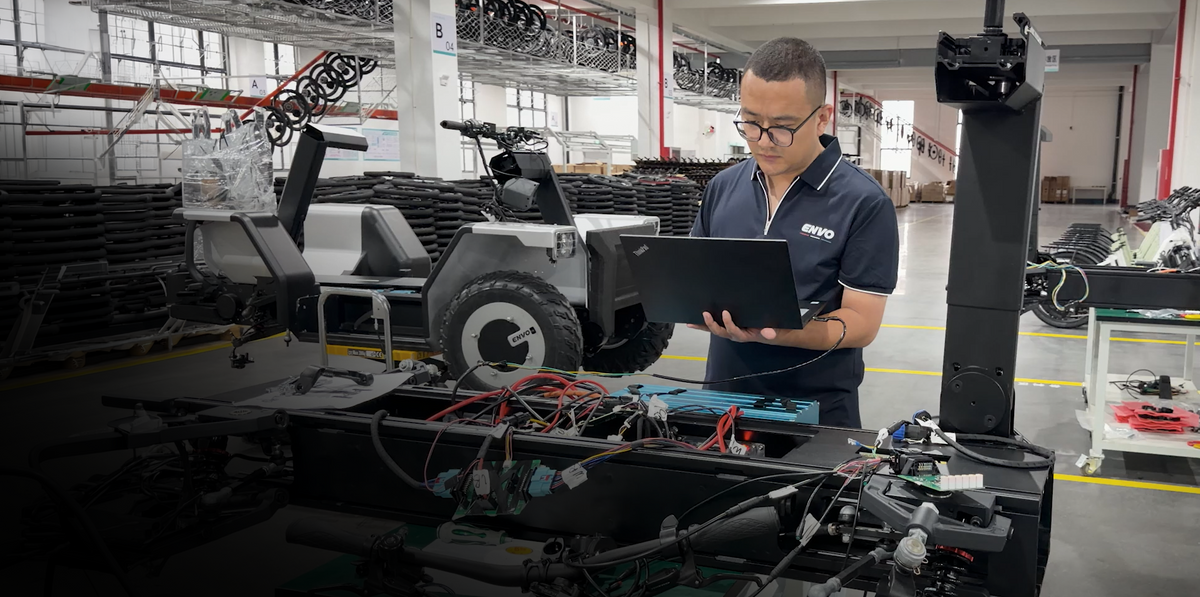
ENVO’s UPT modular electric vehicle platform is advancing through component manufacturing, pilot assembly and vehicle testing. Production vendors are manufacturing parts, assembly is underway, and road testing is taking place in Canada and China.
This phase connects the platform’s engineering development with the manufacturing processes required for repeatable production. It also supports the preparation of five UPT configurations for CES 2027. Customer pre-order deliveries will begin in March 2027.
Development background
UPT was developed to address the gap between bicycles and full-sized vehicles for personal transportation, utility work and specialized applications. The objective is to offer different vehicle configurations built around a shared set of structural, mechanical and electrical components.
The development process has included requirements definition, industrial design, engineering models, simulations, prototype manufacturing and physical testing. Hundreds of individual 3D parts and thousands of engineering drawings were created to translate the platform concept into manufacturable components.
By August 2024, ENVO had begun assembling an initial group of six prototypes. Work included setting up assembly stations, developing cutting and drilling fixtures, checking steering and suspension assemblies, and integrating batteries and controls. Subsequent development has focused on refining the vehicle systems and preparing the supply chain for production.

Manufacturing preparation and current activity
Dedicated UPT tooling includes casting molds for rims, motor covers, suspension arms and steering knuckles, along with aluminum extrusion dies for the chassis, steering components and battery cases. Additional tooling supports seals, fenders and bumper components.
The supply chain involves several manufacturing processes: casting, extrusion, machining, fabrication, coating, molding and electrical assembly. Mechanical components, motors, battery packs, controls and wiring are produced through their respective vendors before integration at vehicle assembly.
The current pilot program uses production tooling and intended manufacturing methods to evaluate both the product and the build process. Some plastic components continue to be 3D-printed during this stage.
ENVO leads the platform’s engineering, technical specifications, and product development from its headquarters in Burnaby, Canada. Manufacturing and pilot assembly are carried out at the company’s factory in Changzhou, China. Once pilot production is underway and the manufacturing processes, suppliers, and components are fully tested, debugged, and aligned, ENVO plans to establish regional assembly lines in North America, Europe, and other strategic markets based on local demand and market requirements.
Mass production through shared components
UPT’s manufacturing approach is based on producing common components across multiple vehicle configurations.
Core castings and extrusions are planned for bulk production. Machining, finishing and subassembly can then be scheduled in batches according to demand. At final assembly, the platform receives the seating, cargo equipment, structures and accessories required for a particular application.
For example, an e-ATV, passenger vehicle and dump transporter can share underlying platform components while using different controls, seating arrangements and equipment.
This is the basis of UPT’s mass-customization strategy: combine the production efficiency of shared parts with the flexibility to serve smaller, specialized markets. The intended benefits include distributing tooling and development costs across applications and reducing the need to develop each vehicle independently.

Pilot assembly and testing in two countries
Road testing is currently in progress in Canada and China, alongside pilot assembly.
The current work supports the evaluation of vehicle operation, component integration, assembly fit and consistency. Feedback from builds and testing informs changes to drawings, components, software and assembly procedures where required.
Testing near both the engineering team and the manufacturing operation allows findings to be reviewed directly by the teams responsible for design and production.
Pilot production is the current stage of the program. Its purpose is to establish the component and assembly readiness needed to progress toward higher-volume manufacturing.
Configurator and pre-orders
The UPT online configurator allows customers to explore the platform, compare vehicle layouts and select configurations suited to their needs. It brings the modular architecture into a practical planning tool for individual customers, fleet operators and prospective partners.
UPT pre-orders have been open since August 2026. Deliveries will begin in March 2027, marking the transition from development and pilot production to vehicles reaching customers.
Customer requirements help inform which configurations and equipment should be prioritized. These include personal and recreational use, property maintenance, agriculture, passenger transport, material handling and fleet operations.
The broader platform objective is to support both complete ENVO vehicles and applications developed with fleet customers, equipment integrators and vehicle upfitters.
CES 2027:the next public milestone
ENVO is preparing five configurations for CES 2027: an e-ATV, golf cart, mobile display platform, pedal-equipped quadracycle and dump transporter.
These builds form part of the pilot production program. Together, they will demonstrate how the same platform architecture can support different uses.
CES will provide a major opportunity to introduce UPT to a wider audience, generate media coverage and meet potential customers and partners. Discussions will focus on early orders, fleet pilots, distribution, application development and regional manufacturing opportunities.
The immediate production priorities remain completing pilot builds, continuing testing, incorporating improvements and preparing the CES vehicles. The next phase is to apply the validated manufacturing and assembly processes to customer-order production, with pre-order deliveries starting in March 2027.

September 2026, e-ATV
Share:
MoonBikes and ENVO: Our Journey and the Next Chapter
Building ENVO: Ali Kazemkhani’s Conversation with Shane Jeremy James on The People-Driven CEO Podcast