

The future of e-mobility will not be defined only by replacing gasoline vehicles with electric ones. It will be shaped by deeper questions: What type of vehicle is actually needed? How much vehicle is enough? How can more specialized mobility products be developed without making each one too expensive to produce?
Two concepts are becoming increasingly important in answering these questions: modular mobility and rightsized mobility. They are closely connected, but they are not the same.
Modular mobility is about how vehicles are designed, produced, configured, serviced, and scaled. Rightsized mobility is about matching the vehicle size, weight, cost, energy use, and capability to the actual job.
A vehicle can be modular without being small. A vehicle can be small without being modular. But when modularity and rightsizing work together, they can unlock a new generation of practical, efficient, customizable electric mobility.

What Is Modular Mobility?
Modular mobility means building vehicles around a shared platform, shared components, and standardized interfaces that can support multiple configurations. In a modular vehicle system, the core architecture may stay the same while the final vehicle changes. The same platform can support different bodies, wheels, tires, suspension packages, cargo systems, seating layouts, accessories, control options, and application-specific modules.
The value is not just technical. It is commercial. Traditional vehicle development is expensive because every new vehicle type usually needs its own engineering, tooling, supply chain, validation, documentation, parts inventory, and service system. That model works for large markets where millions of similar vehicles can be sold, but it does not work well for emerging niche mobility categories.
Modularity changes the economics. It allows many different products to share one foundation, which makes it possible to offer variety while keeping production, service, and inventory more scalable. In simple terms: one platform, many possible vehicles.
Why Modularity Matters
The mobility market is becoming more fragmented. A delivery company, a city maintenance crew, a resort, a farmer, a warehouse operator, a family, and a recreational user may all need electric mobility, but they do not need the same product. Some need cargo capacity. Some need passenger movement. Some need off-road capability. Some need weather protection. Some need compact utility. Some need low-speed road use. Some need private-land operation. Some need easy transportability.
Without modularity, each of these needs becomes a separate product-development challenge. With modularity, a manufacturer can build a shared base platform and then adapt it to different applications. That can make niche mobility commercially viable because demand is no longer limited to one narrow product category, and the same engineering investment can support multiple use cases. This is where modularity enables mass customization: customers receive more purpose-specific products, while the manufacturer keeps a repeatable production foundation.
What Is Rightsized Mobility?
Rightsized mobility is about using the right vehicle for the task. Not every trip requires a full-size car or truck. Not every commercial task requires a van. Not every local utility job requires a pickup. In many cases, a smaller, lighter, lower-cost, lower-energy vehicle can do the job more efficiently.
Rightsized mobility does not mean eliminating larger vehicles. It means avoiding oversized vehicles where they are unnecessary. A highway trip with a family may require a car. Heavy-duty work may require a truck. But a 3 km solo trip, campus movement, local delivery route, municipal park operation, resort shuttle, warehouse run, or light-duty service task may be better served by a compact electric platform.

This matters because electrification alone does not solve every efficiency problem. Electric vehicles can improve fuel economy, reduce fuel costs, and lower air-quality impacts, but vehicle size, weight, and energy consumption still matter. The U.S. Department of Energy notes that EVs can improve fuel economy and reduce fuel costs and air-quality impacts, while the International Energy Agency identifies EVs as a key technology for decarbonizing road transport, a sector responsible for over 15% of global energy-related emissions.
A very large electric vehicle may still use more materials, more battery capacity, more road space, more parking space, and more energy than a smaller electric vehicle designed for the same short-distance or low-speed job. That is the core idea of rightsized mobility: use only as much vehicle as the mission actually requires.
The Distinction Between the Two
Modularity and rightsized mobility solve different problems. Modularity solves a production and commercialization problem. Rightsized mobility solves a use-case and efficiency problem.
How can we build many useful vehicle configurations from one scalable platform, sharing engineering, components, and service systems across products?
What is the correct size and capability of vehicle for this trip, task, or environment? Where are we using more vehicle than the mission actually requires?
A full-size commercial EV platform can be modular. A skateboard chassis that supports different van or truck bodies is modular, but not necessarily rightsized. A small electric microcar can be rightsized for urban travel, but if it has one fixed body and one fixed use case, it is not necessarily modular. The strongest opportunity comes when both ideas work together: a compact electric platform that can be configured for many different practical applications.
Why These Ideas Are Becoming More Important
Transportation systems are under pressure from many directions. Cities face congestion, parking limitations, emissions targets, and delivery challenges. Businesses face high vehicle costs, fuel costs, insurance costs, maintenance costs, and pressure to decarbonize. Communities need safer, cleaner, more space-efficient mobility. Users want alternatives that are more practical than a bike but less costly and bulky than a car.
At the same time, EV efficiency is becoming a bigger topic. ACEEE notes that there are major differences in EV efficiency and that manufacturers should prioritize efficiency because more efficient EVs use less electricity per mile and benefit drivers, the environment, and the grid. This is where rightsized mobility becomes important. Smaller, lighter electric vehicles can often deliver useful mobility with less energy and fewer materials.
But rightsized products often face a commercial challenge: many of their markets are still niche. A compact vehicle for city delivery, another for resorts, another for municipalities, another for recreation, and another for adaptive mobility may each be useful, but none may be large enough to justify a traditional dedicated vehicle program. This is where modularity becomes important. It helps those niche products share one platform, one supply chain, one service system, and one production logic.
Rightsized mobility creates the market need. Modularity makes the business model more scalable. Neither idea on its own is enough; together they make compact, purpose-designed electric mobility commercially realistic.
Why the Future Needs Both
The future of e-mobility cannot be only one product type. It cannot be only cars, only bikes, only scooters, only vans, or only trucks. Mobility needs are too diverse. The market needs more options between existing categories: between bikes and cars, between scooters and utility vehicles, between golf carts and trucks, between cargo bikes and delivery vans, between recreational toys and commercial work vehicles.
This middle space is where many future opportunities exist. But to serve that space, companies need a different product-development model. They cannot afford to create a completely separate vehicle for every small niche. They need modular platforms that support multiple configurations from a common engineering base. This is why the future of e-mobility is likely to be both more modular and more rightsized. Modularity will help manufacturers produce more variety without losing scale. Rightsizing will help users choose vehicles that are more appropriate for their actual needs.

What This Means for ENVO and UPT
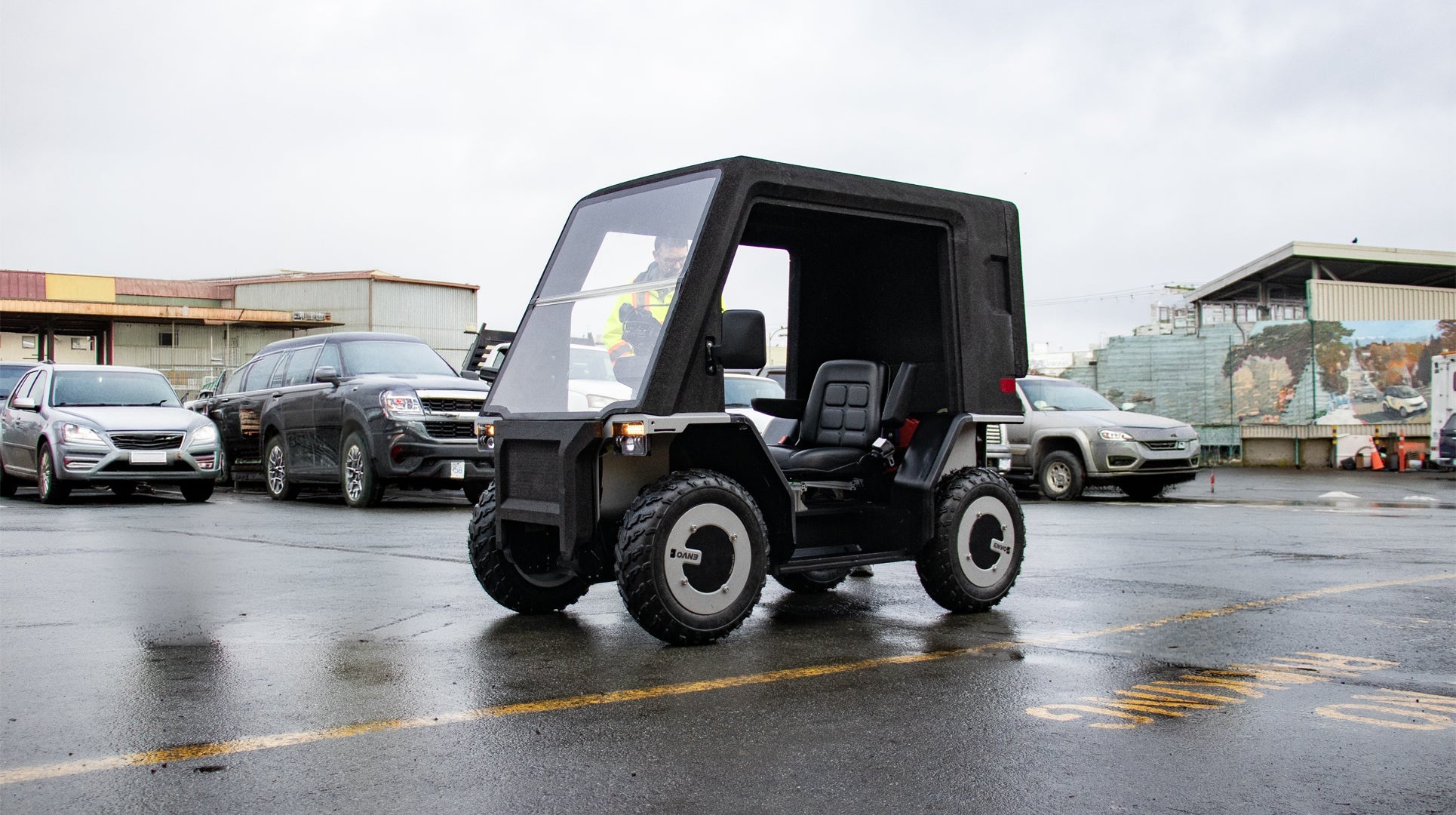
ENVO's UPT project sits at the intersection of these two ideas. UPT is being developed as a compact four-wheel electric platform intended to support many road and non-road applications. Its value is not only that it is smaller than a car. Its value is that it can become different types of compact vehicles from one shared platform. That is the modular opportunity.
At the same time, UPT addresses the need for vehicles that are more appropriate for many local, commercial, recreational, municipal, and utility tasks where full-size vehicles are excessive. That is the rightsized opportunity. The goal is not to build one fixed product for one narrow niche. The goal is to create a scalable platform that can support different applications while preserving common engineering, common service logic, and common production discipline. This is how niche mobility can become commercially realistic.
Conclusion
Modular mobility and rightsized mobility are two separate ideas, but their future is connected. Modularity is about platform strategy, scalability, customization, and production efficiency. Rightsized mobility is about using the correct vehicle for the task, reducing waste, improving efficiency, and filling the gap between oversized vehicles and under-capable alternatives. Together, they point toward a more intelligent future for e-mobility.
The next stage of transportation should not be limited to electrifying existing vehicle categories. It should create new categories where vehicles are lighter, more efficient, more adaptable, and more purpose-designed. The winners will be companies that understand both sides: how to design platforms that can scale, and how to deliver vehicles that actually fit the job. That is where the future of e-mobility becomes most exciting, not just electric, but practical, configurable, efficient, and built around real-world needs.
Built in Canada. Built for the Job.
ENVO designs and supports its electric mobility platforms in Canada, with an engineering-first approach and real service behind every product.
Partager:
Is the Future of E-Mobility Modular?
One Lineup, Eight Lives: How ENVO Builds Bikes the Way Toyota Builds Cars