Qu'est-ce qui fait un excellent vélo électrique tout-terrain ?
Un excellent vélo électrique tout-terrain est conçu pour des terrains qui arrêteraient net un vélo ordinaire. Gravier meuble, montées raides, sentiers sinueux et racineux, descentes rocailleuses - un vélo électrique tout-terrain transforme ces obstacles en la meilleure partie de votre parcours. Voici ce qui définit un vélo électrique tout-terrain spécialement conçu à cet effet :
Un moteur à couple élevé (75 à 85 Nm) est essentiel pour la conduite tout-terrain. Grimper des pentes raides et meubles exige une livraison instantanée du couple qui propulse la roue vers l'avant sans patinage. Un moteur qui hésite ou qui surprend dans les montées techniques compromet l'adhérence et l'élan. Une géométrie de cadre semi-rigide ou tout-suspendue optimisée pour le sentier maintient le vélo stable dans les sections techniques tout en offrant suffisamment de souplesse pour absorber les impacts du terrain. Les pneus larges avec une bande de roulement agressive (2,4" à 2,8") adhèrent à la terre, aux racines et aux surfaces meubles où les pneus étroits glissent. Les freins à disque hydrauliques avec suffisamment de puissance et de modulation pour un freinage contrôlé dans les descentes raides sont non négociables. Les ENVO D50 Hardtail et M50 représentent la gamme de vélos électriques tout-terrain dédiés d'ENVO – tous deux construits spécifiquement pour les cyclistes qui souhaitent explorer le réseau de sentiers de classe mondiale de la Colombie-Britannique avec une assistance électrique.




Pourquoi choisir un vélo électrique tout-terrain ENVO
De la puissance pour tous les sentiers
Les vélos électriques tout-terrain ENVO utilisent des moteurs à moyeu arrière à couple élevé qui fournissent une puissance fiable dans les montées qui caractérisent les sentiers de la Colombie-Britannique. Fini les sections techniques en montée où il faut marcher. Fini l'épuisement au sommet avant que les descentes amusantes ne commencent. Le moteur fournit le couple nécessaire pour maintenir l'élan sur les terrains techniques, tandis que vos jambes contribuent à la cadence et au contrôle.
Prêt pour les sentiers dès l'usine
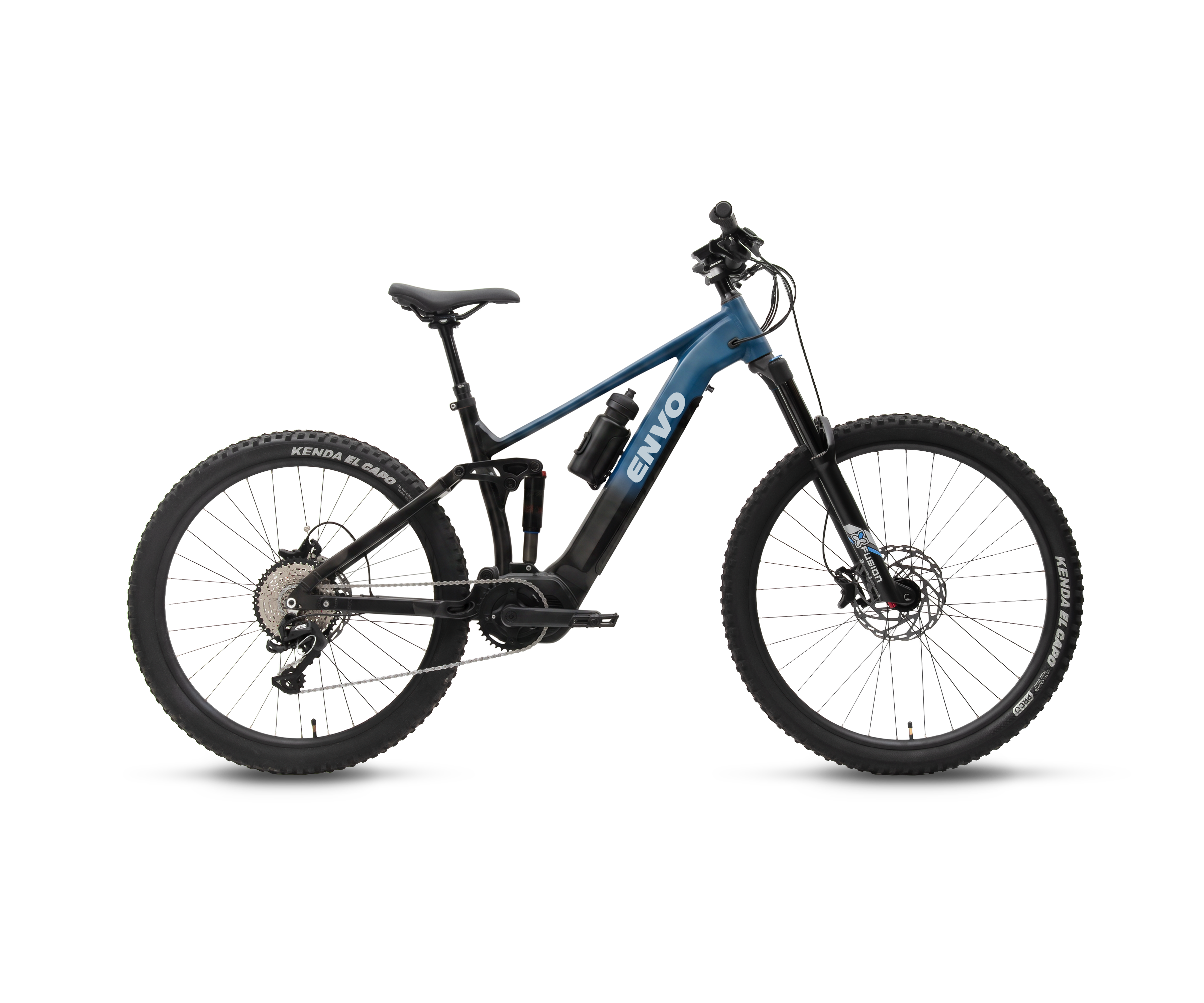
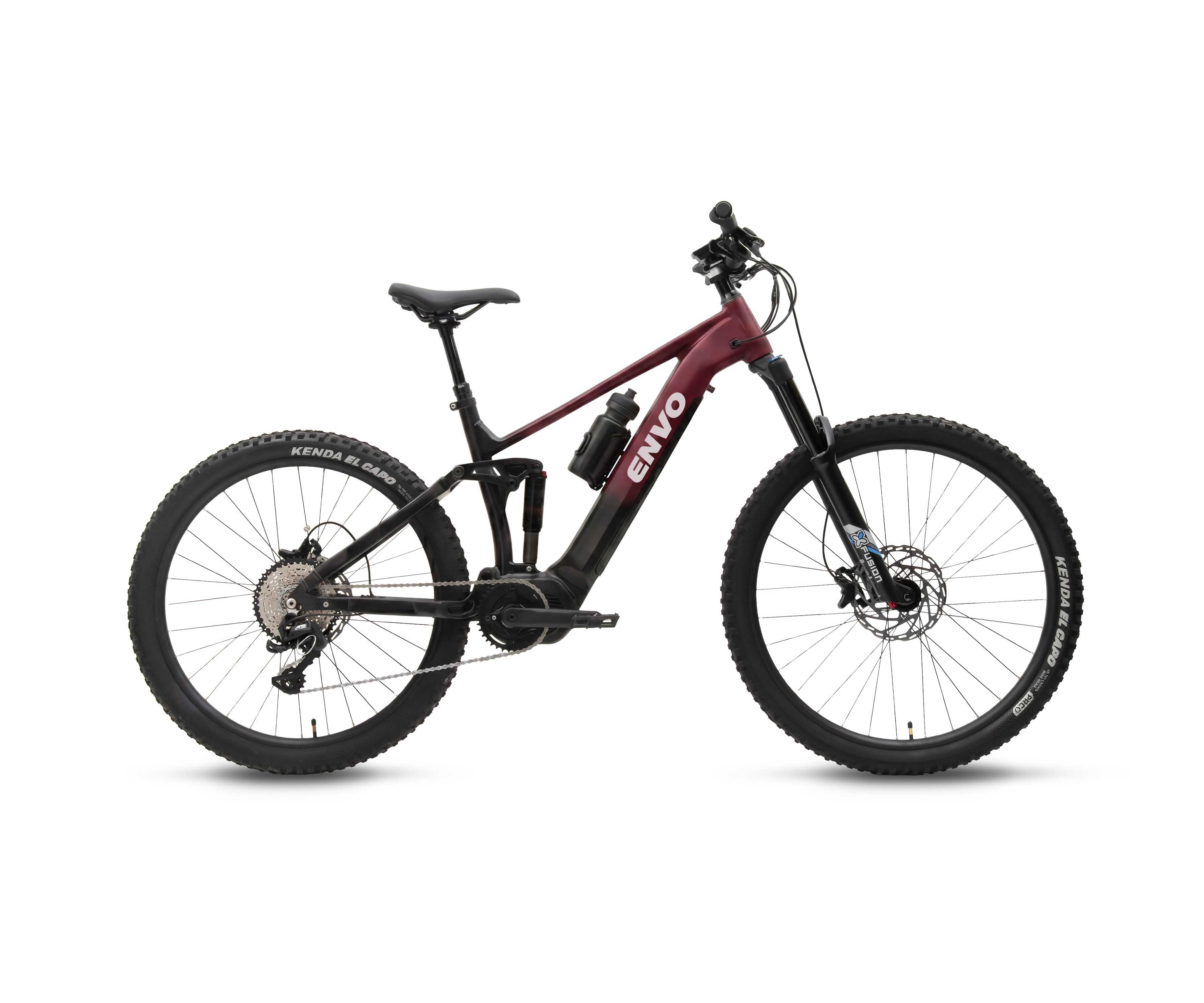
Chaque composant d'un vélo électrique tout-terrain ENVO est sélectionné pour ses performances sur sentier. Des pneus larges et agressifs, des fourches à suspension avant avec un débattement significatif, des freins à disque hydrauliques avec une modulation puissante et des systèmes de moteur étanches qui protègent les composants critiques de la boue et de l'eau des sentiers. Un vélo électrique tout-terrain ENVO est prêt pour les sentiers sans nécessiter de mises à niveau immédiates.
Explorez plus de sentiers à chaque sortie
Le principal avantage d'un vélo électrique tout-terrain est la possibilité de parcourir plus de sentiers par sortie. L'assistance du moteur vous permet d'aller plus loin, de faire plus de tours et de tenter plus de montées techniques avant que la fatigue ne vous force à vous arrêter. Des trajets qui se terminaient auparavant après une seule boucle deviennent des sessions de deux ou trois boucles. Des sentiers auparavant trop éloignés du parking deviennent des parcours habituels.
Modèles de VTT électriques ENVO
ENVO propose deux plateformes de vélos électriques tout-terrain dédiées, couvrant différents niveaux de performance sur sentier :
VTT semi-rigide ENVO D50 : Le D50 semi-rigide est la plateforme tout-terrain polyvalente d'ENVO. Une géométrie semi-rigide éprouvée avec une fourche à suspension avant, un dégagement agressif des pneus et un moteur de pointe de 750 W offrent de véritables capacités de sentier sur une large gamme de terrains en Colombie-Britannique. Le D50 semi-rigide est le choix des cyclistes qui veulent un vélo électrique tout-terrain capable de gérer les sentiers intermédiaires, les chemins de gravier et les terrains mixtes sans compromis. Son support à double batterie signifie qu'une distance de sentier importante est réalisable en une seule sortie.
VTT électrique ENVO M50 : Le M50 est le VTT électrique dédié d'ENVO, conçu pour les cyclistes qui veulent pousser plus fort sur des terrains plus techniques. Le M50 se distingue par une géométrie plus agressive, des composants de suspension améliorés et une liste de spécifications conçues pour une conduite confiante sur le genre de sentiers techniques difficiles qui mettent à l'épreuve les compétences d'un cycliste et son équipement. Si la pratique du sentier est votre objectif principal et que vous voulez une machine tout-terrain dédiée, le M50 est le vélo électrique tout-terrain ENVO qu'il vous faut.
FAQ Vélo électrique tout-terrain
Réglementaire
Règles et règlements d'accès aux sentiers pour les vélos électriques tout-terrain en Colombie-Britannique et au Canada.
Les VTT électriques tout-terrain sont-ils autorisés sur les sentiers de VTT en Colombie-Britannique ?
L'accès aux sentiers pour les vélos électriques hors route évolue rapidement en Colombie-Britannique. De nombreux réseaux de sentiers autorisent désormais les vélos électriques de classe 1 (assistance au pédalage uniquement, jusqu'à 32 km/h) sur les sentiers où circulent les VTT conventionnels. BC Parks autorise les vélos électriques sur les sentiers polyvalents où les véhicules motorisés sont autorisés. IMBA Canada et les associations de sentiers locales dans de nombreuses communautés de la Colombie-Britannique ont mis à jour leurs politiques pour accueillir les vélos électriques hors route de classe 1. Vérifiez toujours la signalisation au début du sentier et les règles spécifiques du gestionnaire foncier avant de rouler. Rouler de manière responsable et respecter les règles affichées est essentiel pour maintenir l'accès aux vélos électriques hors route.
Qu'est-ce que le système de classification des VTT électriques de l'IMBA ?
L'IMBA (International Mountain Bicycling Association) classe les VTT électriques en trois catégories : la Classe 1 (assistance au pédalage uniquement, max 32 km/h) est autorisée sur la plupart des sentiers homologués par l'IMBA. Les Classes 2 (assistance par accélérateur jusqu'à 32 km/h) et 3 (jusqu'à 45 km/h) sont soumises à plus de restrictions. Les VTT électriques tout-terrain ENVO fonctionnent comme des Classe 1 en mode assistance au pédalage lorsque l'accélérateur n'est pas engagé, ce qui leur confère le plus large accès aux sentiers. L'utilisation de l'assistance au pédalage uniquement sur les sentiers partagés est l'approche la plus responsable et la plus largement autorisée.
Dois-je immatriculer mon vélo électrique tout-terrain pour une utilisation sur sentier ?
Aucune inscription n'est requise pour les vélos électriques tout-terrain utilisés sur les sentiers publics conformes aux réglementations PAB. Certains réseaux de sentiers privés (parcs à vélos de stations de ski, par exemple) peuvent exiger un laissez-passer journalier ou un permis spécifique. Obtenez toujours le permis d'accès au sentier approprié pour les réseaux payants. Rouler sans le bon permis peut entraîner des amendes et nuire à la réputation des cyclistes de vélos électriques tout-terrain auprès des gestionnaires de sentiers.
Puis-je rouler avec mon vélo électrique tout-terrain sur les terres de la Couronne et les chemins forestiers en Colombie-Britannique ?
Généralement oui. Les terres de la Couronne et les routes forestières de la Colombie-Britannique sont ouvertes aux vélos électriques tout-terrain et aux cyclistes conventionnels. Ces itinéraires offrent certaines des meilleures opportunités de randonnée à vélo électrique tout-terrain de la Colombie-Britannique. Soyez conscient des fermetures saisonnières pendant la saison des feux de forêt, les opérations forestières et les conditions de dégel printanier qui peuvent fermer des routes spécifiques. Emportez toujours des outils de navigation pour rouler sur les terres de la Couronne éloignées, car la couverture cellulaire peut être inexistante.
Technique
Suspension, pneus, performances du moteur et spécifications des VTT électriques.
Quelle est la course de suspension des vélos électriques tout-terrain ENVO ?
Les VTT électriques ENVO sont équipés de fourches à suspension avant avec un débattement de 100 à 120 mm, adaptées au cross-country et aux sentiers. Ce débattement absorbe efficacement les racines, les rochers et les aspérités du sentier pour les terrains intermédiaires. Pour une pratique agressive de l'enduro ou de la descente, des améliorations de fourche avec un débattement plus important sont une option sur le marché secondaire. La conception semi-rigide (pas de suspension arrière) assure un transfert de puissance efficace en montée tout en maintenant un poids raisonnable.
Quelle est la taille de pneu utilisée par les VAE tout-terrain ENVO ?
Les VTT électriques ENVO sont équipés de roues de 27,5" ou 29" avec des pneus de 2,4" à 2,6" de large et des motifs de bande de roulement agressifs. Des pneus plus larges offrent plus d'adhérence et de souplesse sur les terrains techniques. Les roues de 29" franchissent plus facilement les obstacles et maintiennent mieux la vitesse sur les terrains meubles. Le choix des pneus entre 27,5" et 29" dépend du modèle spécifique - consultez la page produit pour les spécifications exactes. Les montages de pneus tubeless (sans chambre à air) sont fortement recommandés pour une utilisation tout-terrain car ils permettent des pressions plus basses et auto-réparent les petites crevaisons.
Comment la puissance du moteur affecte-t-elle les performances en montée tout-terrain ?
Le couple moteur (mesuré en Nm) est plus important que la puissance en watts pour l’escalade hors route. Un couple plus élevé signifie que le moteur peut maintenir la traction des roues sur des pentes raides et meubles où un moteur à couple plus faible patinerait. Les vélos électriques tout-terrain ENVO produisent de 75 à 85 Nm de couple, ce qui est suffisant pour la plupart des pentes des sentiers de la Colombie-Britannique. Dans les montées techniques les plus raides, la combinaison de l’assistance du moteur et d’une bonne position corporelle (poids vers l’avant, maintien de la traction) fait une différence considérable quant à la réussite ou non de la montée.
Comment l'autonomie de la batterie se compare-t-elle sur les sentiers tout-terrain par rapport aux routes ?
La conduite hors route consomme 40 à 60 % plus d'énergie que la conduite sur route plate équivalente en raison des montées, des surfaces rugueuses augmentant la résistance au roulement et des accélérations fréquentes dues aux sections techniques. Un vélo électrique tout-terrain ENVO qui parcourt 80 km sur des routes plates pourrait parcourir 40 à 55 km sur des sentiers vallonnés. Les configurations à double batterie sont particulièrement précieuses pour les cyclistes hors route qui prévoient de longues journées ou des boucles loin d'un point de charge.
Les moteurs de VTT électriques ENVO sont-ils étanches à la boue et à l'eau ?
Oui. Les moteurs-moyeux ENVO utilisent des systèmes de roulements scellés et des boîtiers résistants aux intempéries qui résistent à la boue, à l'eau et aux débris de sentier dans des conditions normales de conduite hors route. Évitez de nettoyer le moteur directement à haute pression ou de le submerger lors des traversées de cours d'eau. Après des sorties boueuses, rincez le boîtier du moteur avec de l'eau à basse pression et laissez-le sécher avant de le ranger. Une inspection régulière des boulons de montage du moteur et des connexions de câbles empêche les vibrations du sentier de provoquer des connexions lâches au fil du temps.
Cas d'utilisation
Quel VTT électrique est adapté à vos objectifs de trail ?
Quel vélo électrique tout-terrain est le meilleur pour les sentiers de VTT de la Colombie-Britannique – le D50 ou le M50 ?
Pour le singletrack intermédiaire et le style de cross-country, le semi-rigide D50 est le choix polyvalent et rentable. Pour les cyclistes qui parcourent principalement des réseaux de sentiers techniques avec des pentes plus raides, des descentes plus importantes et des caractéristiques plus exigeantes, la géométrie plus agressive et les composants améliorés du M50 offrent des capacités supplémentaires significatives. Les deux sont des vélos électriques tout-terrain réellement performants – le M50 est simplement plus axé sur une utilisation exigeante en sentier.
Puis-je utiliser un vélo électrique tout-terrain pour faire du bikepacking dans l'arrière-pays de la Colombie-Britannique ?
Absolument. Le semi-rigide ENVO D50 avec double batterie et sacoches de bikepacking légères est une excellente plateforme de bikepacking pour l'arrière-pays. Le réseau de routes forestières, de chemins de gravier et de sentiers sauvages de la Colombie-Britannique est idéal pour le bikepacking à vélo électrique. La planification de l'autonomie est essentielle : cartographiez soigneusement vos options de recharge pour les itinéraires de plusieurs jours. De nombreuses communautés de la Colombie-Britannique situées le long des itinéraires de bikepacking populaires disposent de prises de courant de 120 V accessibles dans les campings, les épiceries et les auberges.
Un vélo électrique tout-terrain est-il bon pour les débutants en sentiers ?
Oui, un VTT électrique tout-terrain est particulièrement adapté aux débutants. L'assistance du moteur permet de ne pas se sentir intimidé par les montées, ce qui est souvent décourageant pour les débutants, et leur permet de se concentrer sur le développement de leurs compétences de maniement plutôt que sur la gestion de la fatigue. Les cyclistes plus expérimentés d'un groupe peuvent attendre moins longtemps en haut des montées. Les débutants progressent plus vite car ils passent plus de temps sur les sentiers et moins de temps à pousser leur vélo dans les collines.
Puis-je utiliser mon vélo électrique tout-terrain dans un parc à vélos de station de ski en été ?
Les politiques d'accès pour les vélos électriques dans les parcs de vélo des stations de ski de la Colombie-Britannique varient d'une station à l'autre. De nombreuses stations proposent désormais des journées dédiées aux vélos électriques ou des politiques spécifiques d'accès aux remontées mécaniques pour ces vélos. Certaines autorisent les vélos électriques de classe 1 sur certains sentiers. Contactez votre station spécifique pour connaître sa politique actuelle. La popularité croissante des vélos électriques tout-terrain incite davantage de stations à développer des infrastructures de sentiers et des programmes d'accès spécifiques aux vélos électriques.
Comparaisons de produits
Comparaisons entre les ENVO D50 et M50, et entre les vélos électriques tout-terrain et les VTT classiques.
ENVO D50 Semi-rigide ou M50 – quel vélo électrique tout-terrain devrais-je choisir ?
Choisissez le D50 Hardtail si vous voulez un VTT électrique polyvalent qui s'adapte aux sentiers, aux chemins de gravier et aux terrains mixtes sans être trop spécialisé. Il est plus léger, plus efficace pour un usage mixte et fonctionne aussi bien comme vélo de trail que comme vélo de ville performant. Choisissez le M50 si la pratique du trail est votre objectif principal et que vous souhaitez des performances de VTT dédiées avec une géométrie plus agressive adaptée aux terrains techniques. Le M50 est une machine de trail plus spécialisée ; le D50 Hardtail est le meilleur tout-rond.
Vélo électrique tout-terrain vs VTT classique - le moteur en vaut-il la peine sur les sentiers ?
Pour la plupart des vététistes, oui. Le moteur transforme les montées exigeantes de la Colombie-Britannie, d'une épreuve d'endurance en une expérience vraiment agréable. Vous arrivez au sommet des montées avec l'énergie nécessaire pour profiter de la descente. Vous pouvez faire plus de tours. Vous pouvez rouler avec des amis de différents niveaux de forme physique sans que personne n'attende trop longtemps. L'inconvénient est le poids - un vélo électrique tout-terrain est 8 à 12 kg plus lourd qu'un VTT non motorisé équivalent, ce qui est perceptible sur les sections très techniques où la maniabilité du vélo est importante. Pour la majorité des sentiers de la Colombie-Britannique, les avantages du moteur l'emportent largement sur la pénalité de poids.
VTT électrique semi-rigide ou tout suspendu : lequel est le mieux ?
Les vélos électriques semi-rigides (suspension avant seulement, pas d'amortisseur arrière) sont plus légers, plus efficaces pour le transfert de puissance dans les montées et nécessitent moins d'entretien. Ils conviennent bien au cross-country, au gravel et aux sentiers intermédiaires. Les vélos électriques tout suspendus ajoutent un débattement de suspension arrière qui améliore considérablement le confort et le contrôle dans les descentes techniques, sur les surfaces de sentiers accidentées et sur les plus grands obstacles. La gamme tout-terrain actuelle d'ENVO est axée sur les semi-rigides, ce qui convient au cross-country et aux randonnées polyvalentes que la plupart des cyclistes de la Colombie-Britannique pratiquent réellement. La suspension intégrale est le choix pour l'enduro dédié et les descentes techniques.
Sécurité
Équipement de protection et pratiques sécuritaires pour la conduite de VTT électriques hors route.
Quel équipement de protection me faut-il pour faire du VTT électrique en tout-terrain ?
Un casque de vélo de montagne certifié est le minimum. Pour le cyclisme de trail, ajoutez des genouillères, des coudières et des gants rembourrés. Pour les terrains plus techniques avec des dénivelés et des sauts, un casque intégral et une protection corporelle complète offrent une protection nettement supérieure. Des pédales plates avec des picots et des chaussures de trail robustes améliorent l'adhérence et le contrôle du pied dans les sections techniques. Les couleurs haute visibilité sont utiles sur les sentiers partagés où les randonneurs pourraient ne pas vous entendre arriver.
Comment puis-je rouler en toute sécurité sur un VTT électrique sur des terrains techniques ?
Roulez à une vitesse adaptée à votre niveau et à votre visibilité. Dans les montées techniques, suivez la trajectoire choisie et maintenez votre élan plutôt que de vous arrêter au milieu d'un obstacle. Dans les descentes, gardez votre poids en arrière et vers le bas, regardez votre ligne de sortie et utilisez les deux freins progressivement plutôt que de les serrer brusquement. L'assistance moteur peut inciter à rouler plus vite que ce que vos compétences ne le permettent - adaptez toujours votre vitesse à votre capacité réelle à gérer le terrain à venir. Roulez accompagné lorsque vous explorez de nouveaux sentiers ou des sentiers isolés.
Que devrais-je emporter lors d'une randonnée à VTT électrique isolée et tout-terrain ?
Emportez un kit de réparation de sentier (démonte-pneus, chambre à air de rechange ou mèches tubeless, mini-pompe, dérive-chaîne), un téléphone entièrement chargé avec des cartes hors ligne téléchargées, une trousse de premiers secours, de l'eau et de la nourriture pour une durée plus longue que celle de votre sortie prévue, un chargeur portable et des informations de contact d'urgence. Informez quelqu'un de votre itinéraire prévu et de votre heure de retour estimée avant de vous aventurer en terrain isolé. Dans l'arrière-pays de la Colombie-Britannique, les conditions peuvent changer rapidement – la préparation est non-négociable.