

Cities have stopped working.
We optimized them for delivery apps, parking minimums, and billionaires who don’t live there. The result: congestion, climate decay, and a generation priced out of dignity.
Neourbania is a course correction. Not a “smart city.” Not a utopia. A reset.
This is what happens when we stop asking what technology can do to cities and start asking what cities should do for people. It’s urbanism for the post-convenience era: clean mobility, modular infrastructure, regenerative economics, and digital systems that serve citizens, not surveil them.
It’s also real. This isn’t a white paper. It’s a working model.
The Four Engines of Neourbania
1. Urban Personal Transportation (UPT)
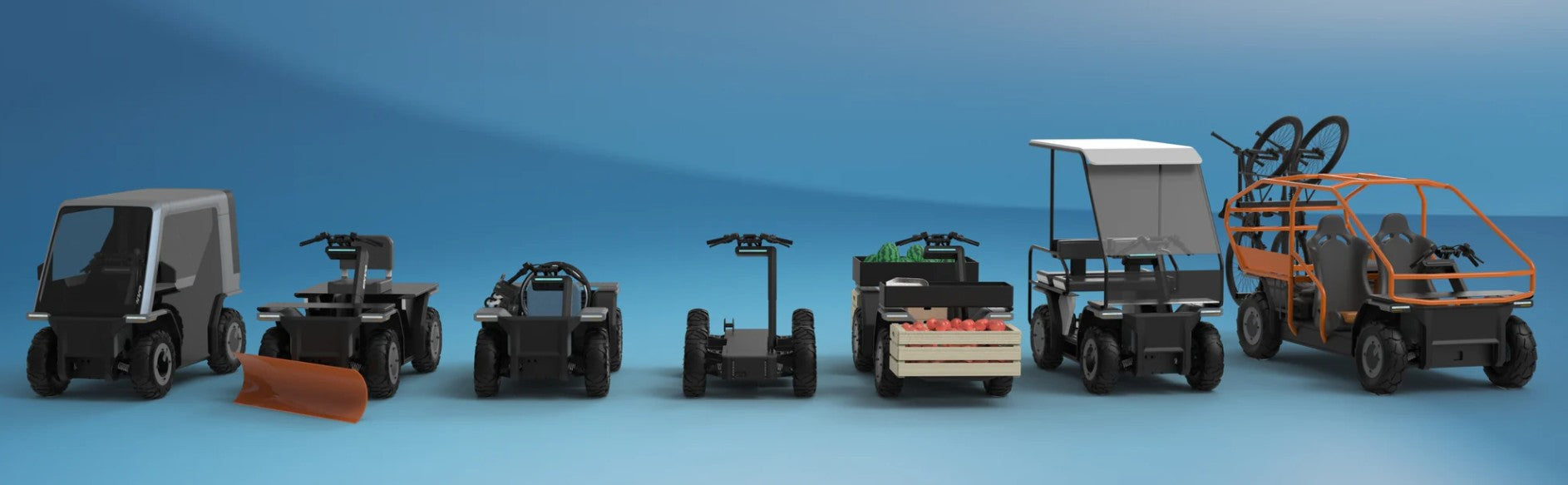
Mobility is the chokehold of most cities. Cars dominate because we designed everything around them—and then act shocked when nothing works. Neourbania flips that. The core is UPT: lightweight electric vehicles purpose-built for real-world tasks. Not scooters for tourists. Actual tools for everyday life. Think electric ATVs for farms and trades, cargo haulers for deliveries, and street-legal personal vehicles that don’t need charging stations, licenses, or six figures in income. Built by ENVO. Solar-ready. Off-grid optional. Practical, affordable, and frankly, fun. It’s not mobility as a service. It’s mobility as a birthright.
2. Resilient Micro-Infrastructure
Legacy infrastructure is a liability. One flood, one fire, one blown transformer, and entire systems fail. Neourbania builds from the ground up with modular, decentralized systems. Microgrids. Solar canopies. Portable water capture. Vertical agriculture. Shared facilities for power, food, and shelter. Everything plugs in. Everything scales. Everything’s designed to break gracefully, not catastrophically.
3. The Civic Tech Layer
Smart cities overpromised and underdelivered. They automated streetlights and ad placement while ignoring actual problems—housing, access, transparency. Neourbania takes a simpler, more honest approach: tech as utility. Private data stays private. Networks are peer-to-peer. Local AI models assist with civic services—nothing more, nothing less. This isn’t Silicon Valley’s version of urban life. This is digital infrastructure with democratic values.
4. Ownership and Governance
If the city belongs to hedge funds, it doesn’t belong to you. Neourbania returns ownership to the people living in it. Land trusts. Co-op fleets. Public-access fabrication and storage facilities. Participatory budgeting systems powered by open-source platforms. This is capitalism with training wheels. Or maybe just capitalism without the predatory middlemen.
What Comes Next
Neourbania isn’t theoretical. It’s already under construction in pockets.
By mid-2026, UPT deployments will be operational in parts of British Columbia, Quebec, and rural communities around the globe. Public toolkits will follow, including blueprints, APIs, deployment guides. Developers and municipalities will be able to stand up a Neourbania node in under 60 days. By 2027, entire blocks, campuses, and farm communities will transition into mobility-first, energy-independent, modularly governed urban microzones.
We’re not waiting for policy to catch up. We’re building around it.
Why It Matters
Every institution that governs modern cities—transportation, housing, zoning, energy—is optimized for fragility. Neourbania is optimized for resilience. If you believe the future doesn’t need to be a worse version of the present, you’re probably Neourbanian. If you think cities should make life easier for regular people instead of harder, you’re Neourbanian. If you think owning how you move, live, and connect shouldn’t require government grants or venture capital, you’re already in.
What You Can Do
Start small. You don’t need a government grant. You don’t need a billion-dollar fund. You need land, people, and conviction. Neourbania can be piloted in a cul-de-sac, an abandoned warehouse, or the parking lot behind your building.
We have the tools. You bring the will.
Next in the series: How to launch a UPT node in under 30 days—and why the future of local work runs on four small tires.
Until then: break the grid. Build something that breathes.
About the Author

Mitch Merker is an electric micromobility enthusiast and the Sales Lead for Dealer Networks at ENVO. With a passion for sustainable transportation and a knack for connecting with people, Mitch shares his insights and experiences through engaging blog posts and articles. He believes that electric micromobility has the power to transform our cities and towns, making them more livable, sustainable, and fun. When he's not writing about e-bikes, e-scooters, and other innovative forms of electric transport, you can find him exploring the beautiful landscapes of British Columbia on his trusty ENVO D50 e-bike.
Connect with Mitch:
Email: mitch.m@envodrive.com
LinkedIn profile: https://www.linkedin.com/in/mitch-merker-8607a719/
Instagram: https://www.instagram.com/mitch.merker/
Share:
The End of Driving Alone Just Because You Can: A Look Ahead at Urban Mobility
Hyper-Growth is 𝗞𝗶𝗹𝗹𝗶𝗻𝗴 Micromobility!