

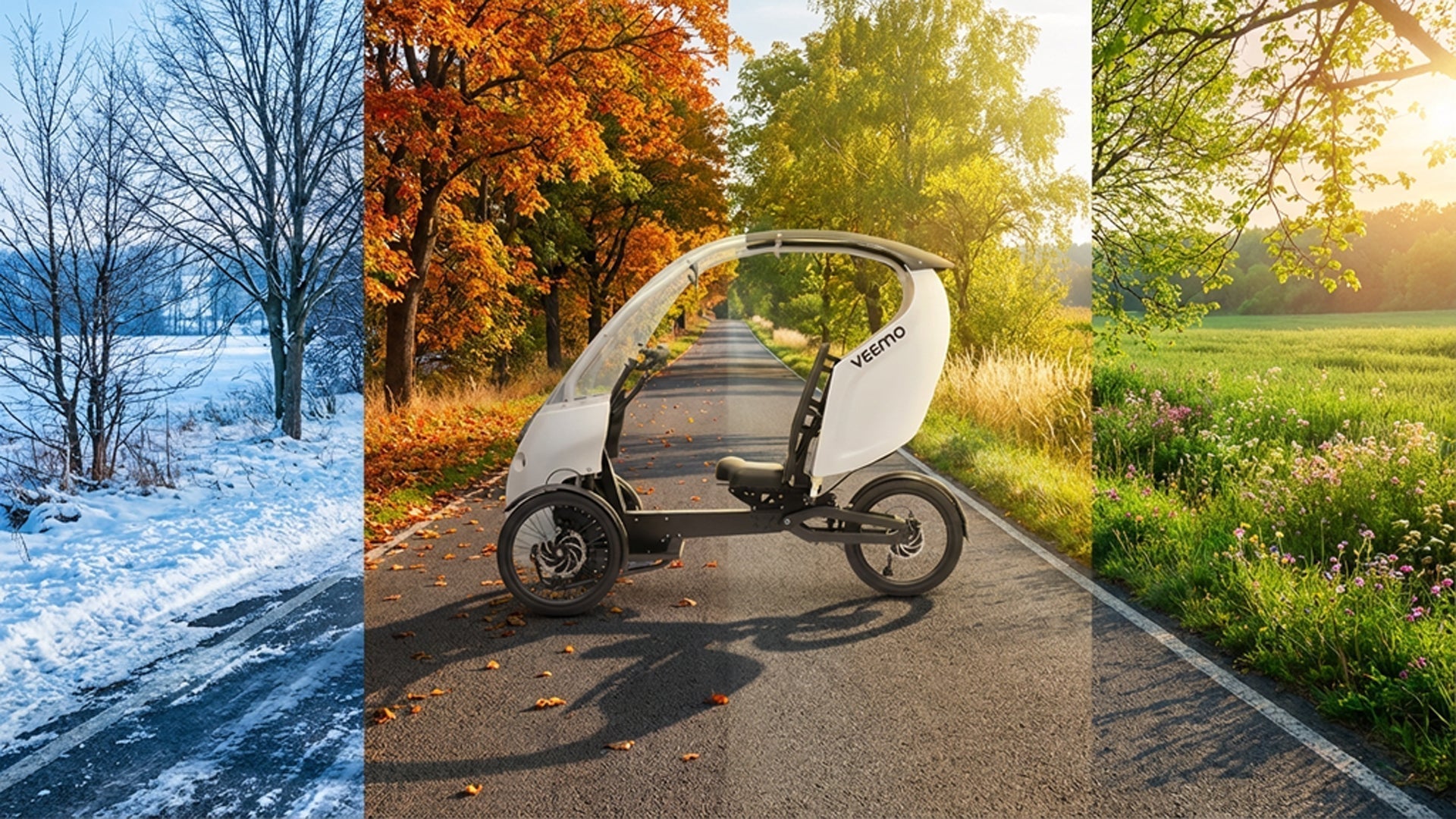
Cycling is often described as one of the healthiest, most efficient ways to move through a city. Yet in many places, it remains a seasonal habit. Once rain, cold, or winter conditions arrive, most people return to cars or public transit.
This raises an important question:
If cycling is such a strong transportation solution, why does it stop working for so many people once the weather changes?
Over the past month, we explored what actually prevents cycling from becoming year-round transportation and what design, technology, and habits can realistically change that.
Why Weather Stops Most People From Cycling
For most commuters, weather introduces uncertainty.
Rain can arrive unexpectedly. Cold air makes rides uncomfortable. Wet roads feel unsafe. And managing extra gear becomes a daily burden. Traditional bikes and e-bikes place nearly all responsibility for weather protection on the rider, which works for experienced cyclists but excludes a much broader group of people.
Understanding how Veemo keeps you dry in the rain helps illustrate why weather protection is often the first requirement for making cycling practical beyond fair-weather days.

Stability and Confidence Matter More Than Motivation
Another major reason people stop cycling in winter is perceived safety.
Wet leaves, painted road markings, and uneven pavement reduce traction. On two-wheel bikes, maintaining balance becomes more physically and mentally demanding as conditions worsen, especially for casual riders.
Looking at how electric trikes handle slippery winter roads shows why stability-focused designs can dramatically improve confidence and control when conditions are less than ideal.

Cold Weather Is a System Problem, Not Just a Temperature Problem
Winter riding is often framed around extreme cold, but most winter days are not extreme. The real issue is how vehicles, electronics, and batteries behave consistently over time.
Cold affects efficiency and comfort, but well-designed electric systems are built to operate reliably within realistic temperature ranges. Exploring how Veemo performs in cold weather and winter conditions shifts the conversation away from edge cases and toward everyday usability.
Designing for the majority of winter days, rather than the harshest ones, significantly increases how often people feel comfortable riding.
All-Weather Does Not Mean Fully Enclosed
It is tempting to assume that the solution to winter cycling is full enclosure and cabin heating. In practice, this introduces new challenges, including added weight, higher energy use, ventilation issues, and safety trade-offs.
A more balanced approach focuses on protecting riders from wind, rain, and road spray while maintaining airflow and stability. This is the thinking behind what makes a bike truly all-weather, where thoughtful design often delivers more real-world value than full isolation from the environment.

Staying Warm Means Heating the Rider, Not the Vehicle
One of the clearest insights from all-weather commuting research is that heating the vehicle is rarely efficient for lightweight mobility.
Heating air requires large amounts of energy and quickly reduces range. Modern heated clothing, on the other hand, provides targeted warmth using minimal power. This approach avoids overheating and supports longer, more comfortable rides, as explained in how to stay warm without overheating in a semi-enclosed vehicle.

Gear Becomes Simpler When the Vehicle Does More
When riders are protected from most rain and road spray, winter gear no longer needs to be extreme.
Instead of heavy waterproof layers and shoe covers, riders can focus on mobility, comfort, and cycling-friendly fit. This shift is clear when looking at the best jackets, gloves, and shoes for winter riding with a Veemo, where lighter, more practical gear becomes viable for daily use.
Less gear means less preparation, which is critical for building consistent commuting habits.
Why Winter Commuting Often Feels Harder Than It Needs to Be
Most people are not avoiding cycling because they dislike it. They avoid it because winter riding feels unpredictable.
When commuting becomes predictable—arriving mostly dry, warm enough, and stable—cycling starts to feel like a default option instead of a conditional one. That is why why Veemo makes winter commuting easier than expected resonates with riders who never considered themselves year-round cyclists.

From Seasonal Activity to Everyday Transportation
The key takeaway is simple: cycling does not need to be seasonal.
By addressing weather protection, stability, and comfort together, modern micro-mobility designs can make cycling realistic for far more days of the year. The goal is not to ride in every possible condition, but to remove the biggest barriers that prevent everyday use.
That shift fundamentally changes how people move through cities.
Learn More
For deeper dives into these topics and real-world examples of all-weather cycling design, visit Veemo.ca, where each of these ideas is explored in detail.
Share:
Hyper-Growth is 𝗞𝗶𝗹𝗹𝗶𝗻𝗴 Micromobility!
Solar Panel Chargers for E-Bikes: What to Know Before You Buy
1 comment
Maybe it would be a good idea to add (optional) seat and handlebars heating?