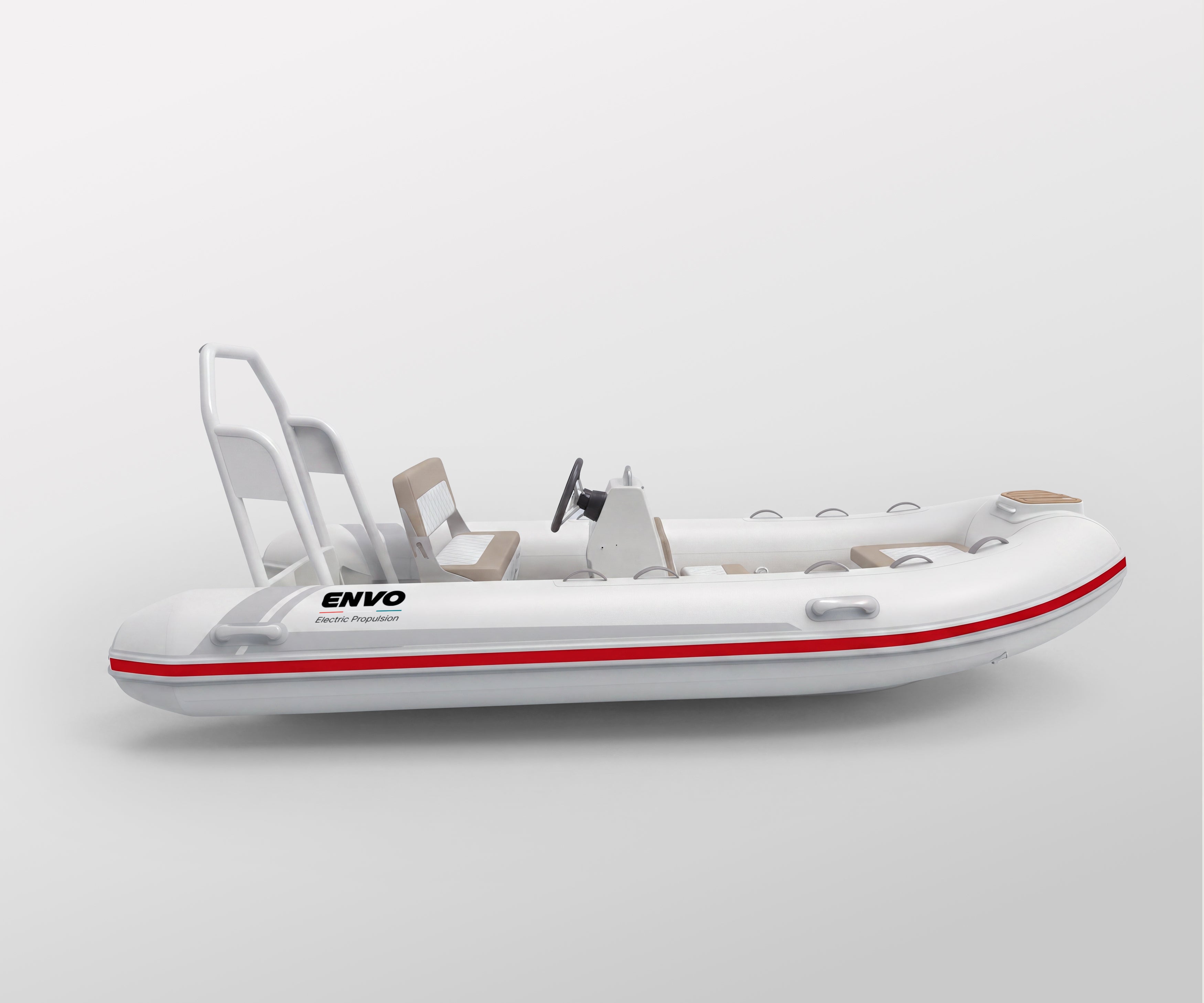
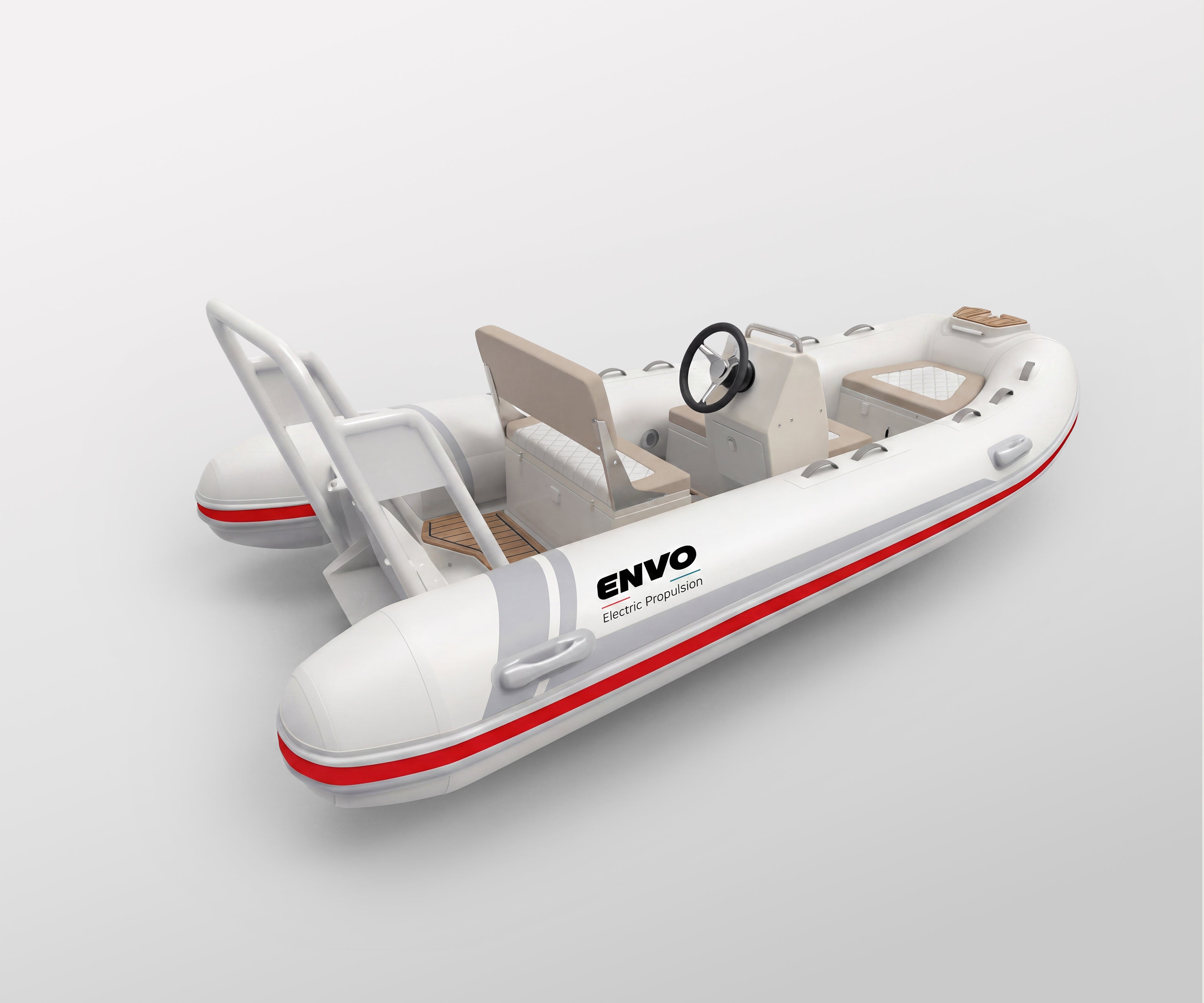
Envo Electric Boat 380
The stock shown is the physical count in our warehouse as of today. It is an inventory position, not a guarantee of what is available to order, because it can include:
- floor and display units that are not for sale
- damaged units that we do not offer to dealers
- units already allocated to open orders, which we fulfil first in, first out
If a figure is below 10, contact your dealer rep to confirm actual availability before placing your order.
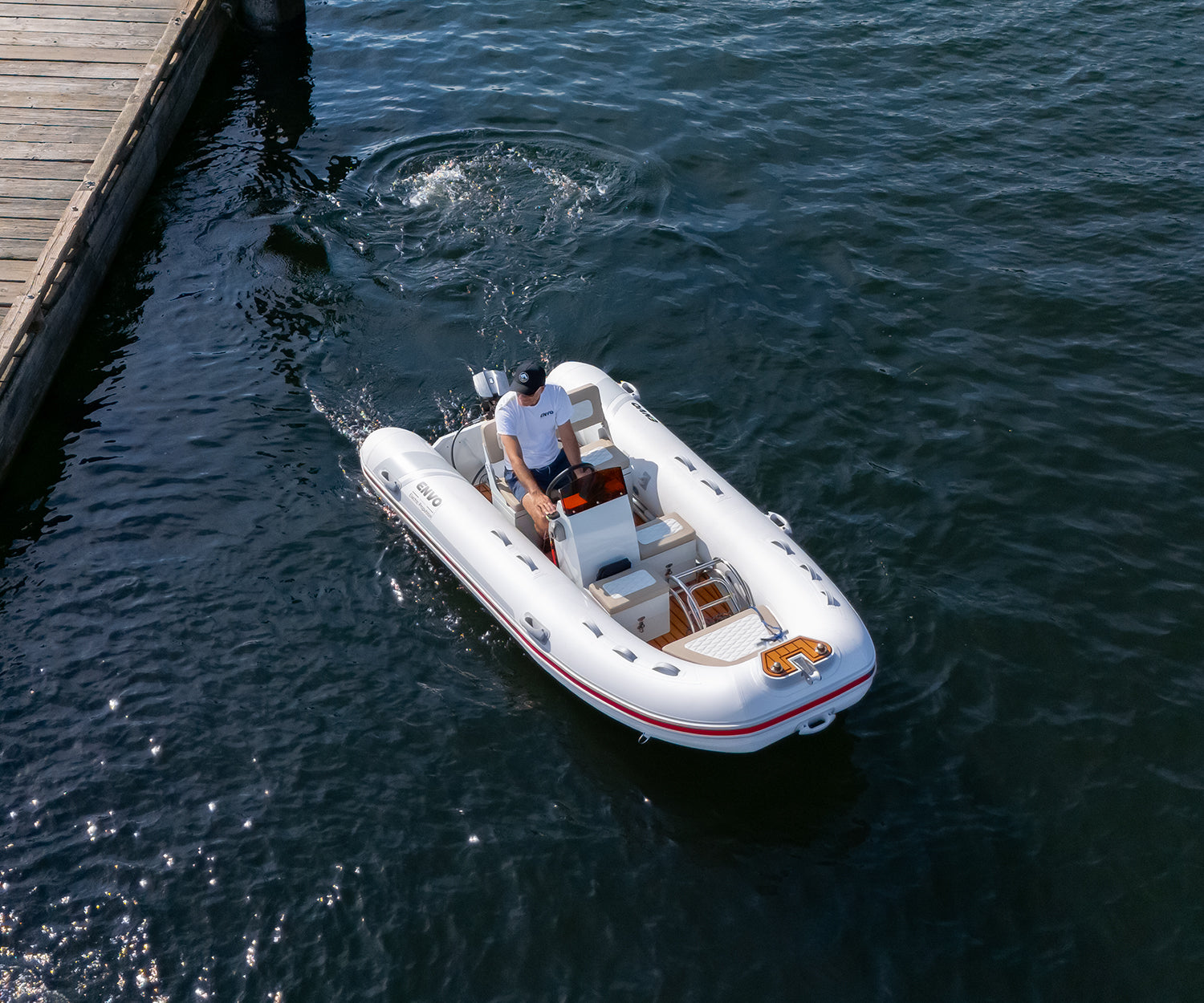
Affordable Electric RIB Boat with quiet outboard.
The ENVO Electric Boat 380 has a full base price of C$19,979
Every boat is built to order, with delivery approximately four months after your order is placed.
Choose how you pay. Pay in Full, C$19,979, covers the base boat today. Build-to-Order Deposit, C$4,994.75, is 25% of the base price and reserves your build slot. Either way, your final price including options and taxes is confirmed and invoiced before delivery.
Compatible accessories
Pairs well with

Tested top speed
27 KM/H
16.7 MP/H

Max Range
30-70 Km
Click to Calculate
Electric drive
10.5kw
Dedicated seats
5
The efficiency equation
Electric but affordable
The affordable electric boat is not the one with the biggest battery. It is the one that needs less energy to do the job.
Less mass
A lightweight RIB requires less energy to accelerate, plane and cruise.
Less battery
Efficiency reduces dependence on oversized battery packs, the most expensive part of many e-boats.
More practical
Lower weight means easier trailering, launching, storage and everyday ownership.

Keep the adventure, Leave the engine behind.
Quiet acceleration, no gasoline smell, no engine oil and far fewer propulsion-service items between you and the water. Electric propulsion turns boating into a quieter, simpler connection with the water: push the throttle and move, without exhaust, fuel smell or the vibration of a combustion engine. Whether it is a day with the family, fishing at sunrise, a cottage run, tender duty or a quiet patrol, the ENVO Electric Boat is designed to make the useful part of boating easier.
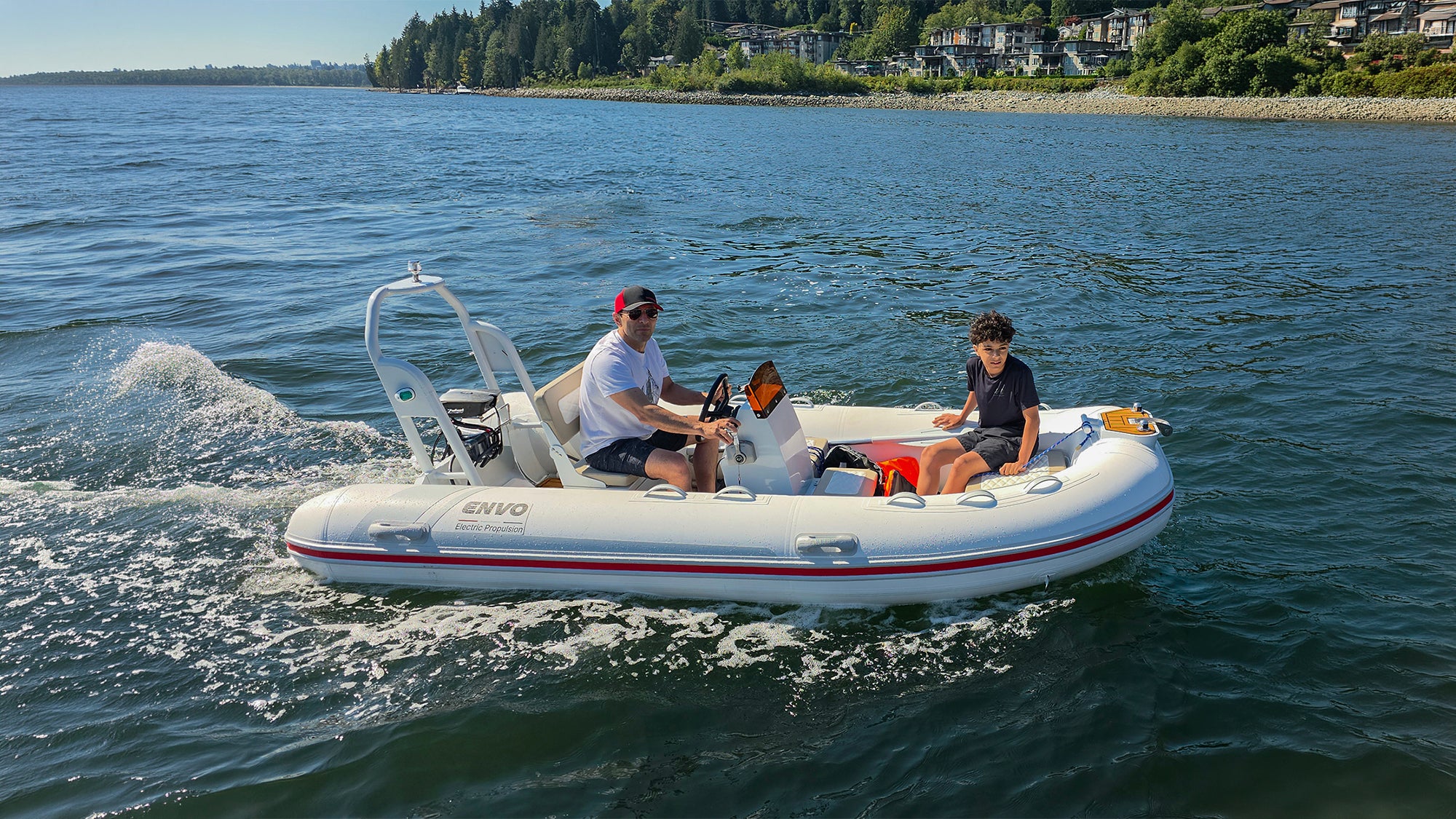
We didn’t reinvent the boat.
RIBs already have mature geometry, proven materials, established manufacturing and exceptional weight-to-capability. ENVO starts with an industry-ready 3.8 m aluminum RIB platform, customized to our layout and design through experienced marine manufacturers. That lets us focus our engineering where electrification still needs work: battery, controls, integration, safety, certification and support.
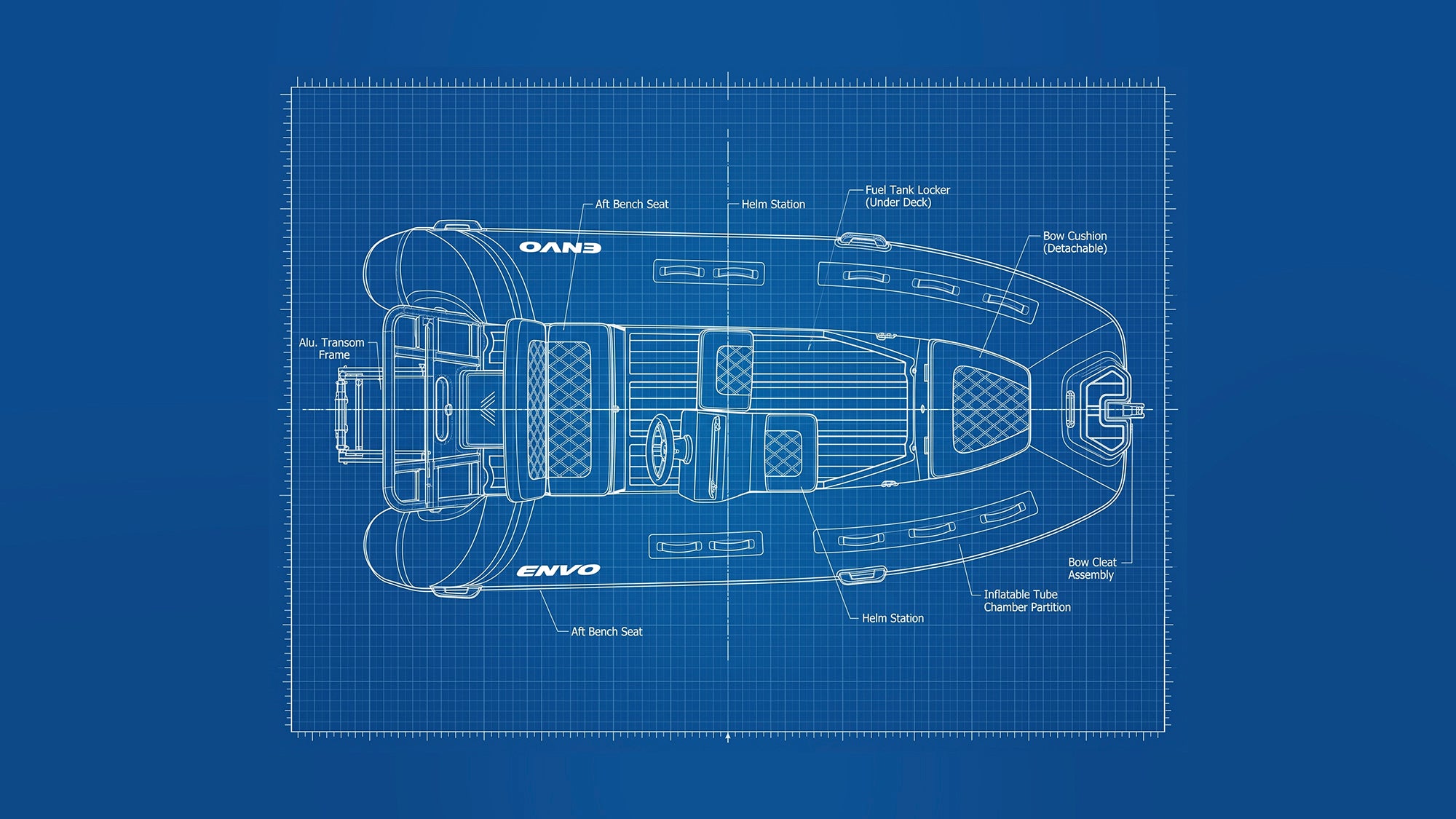
Lightweight is part of the powertrain.
Every kilogram ENVO removes from the hull is a kilogram the motor and battery no longer need to push through water. The rigid aluminum hull provides structural durability and predictable planing geometry, while the inflatable tubes add stability, buoyancy and forgiving impact protection. It is a practical combination for family recreation and utility use.
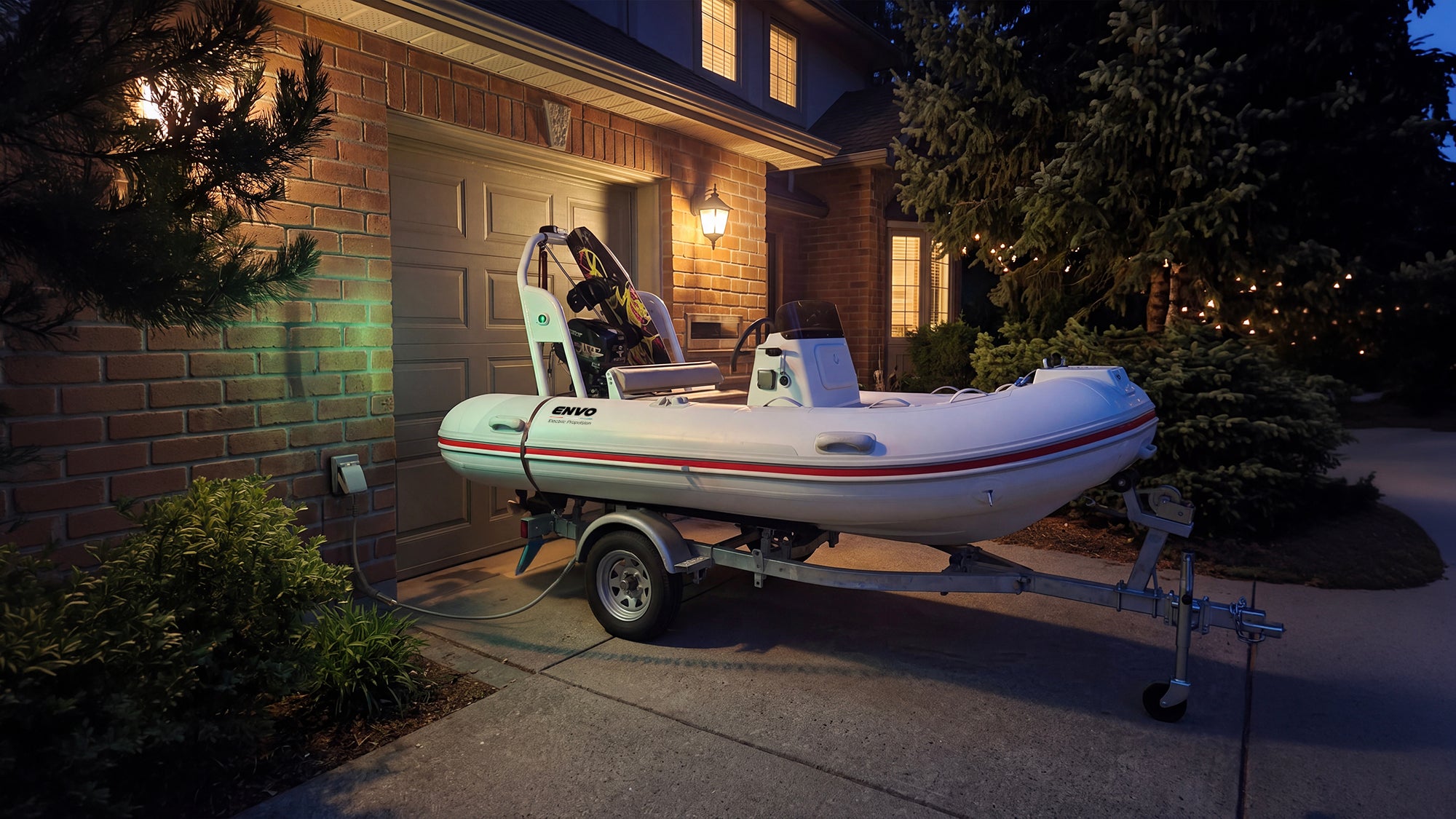
Charge overnight. Go again tomorrow.
No gasoline, engine oil, spark plugs or traditional combustion-engine winterization. Electricity becomes the primary propulsion-energy cost. The vessel still needs routine inspection, cleaning, corrosion prevention, propeller and steering checks, and battery and electrical care, particularly in salt-water operation.
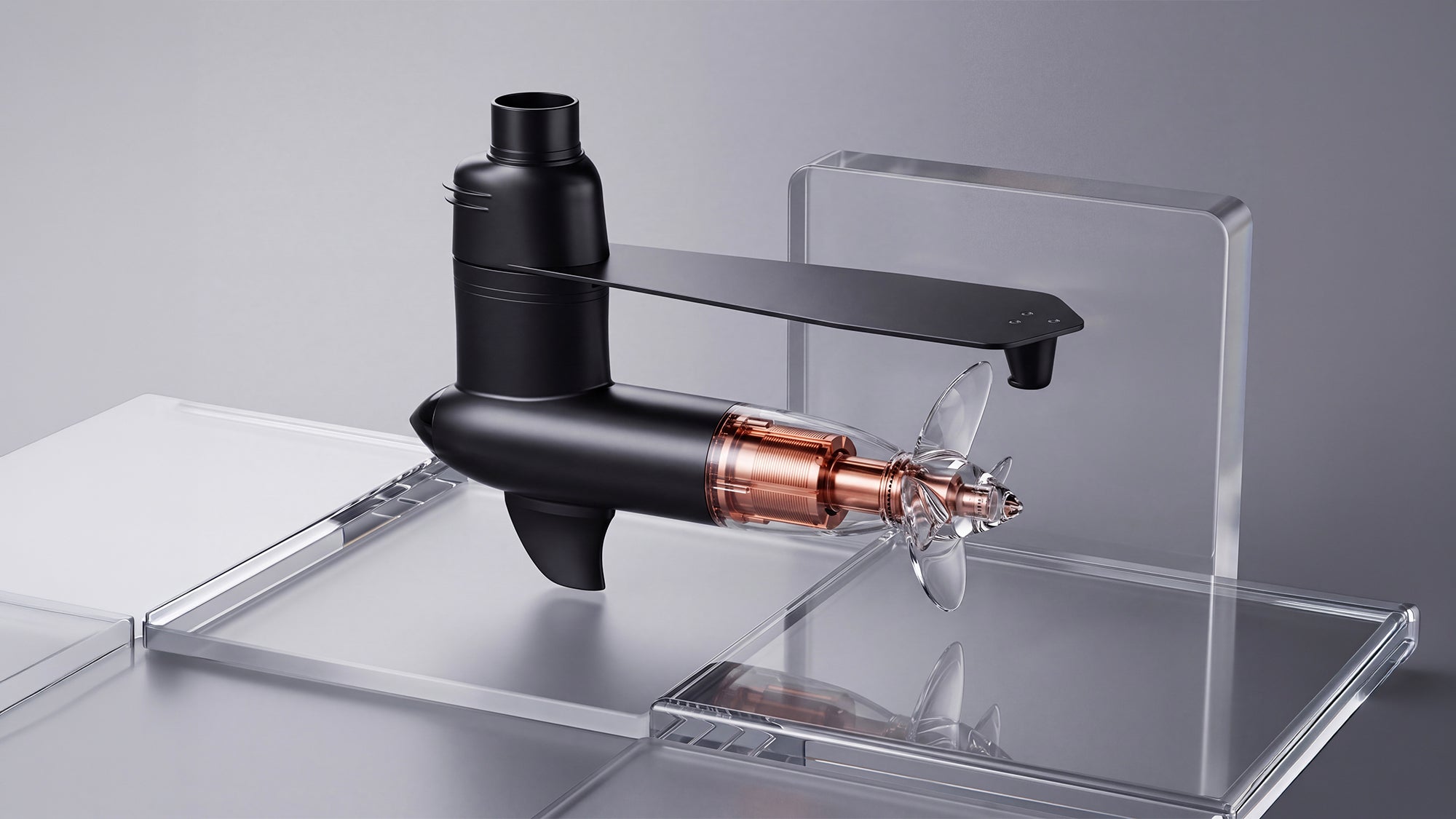
Instant drive. Very little to maintain.
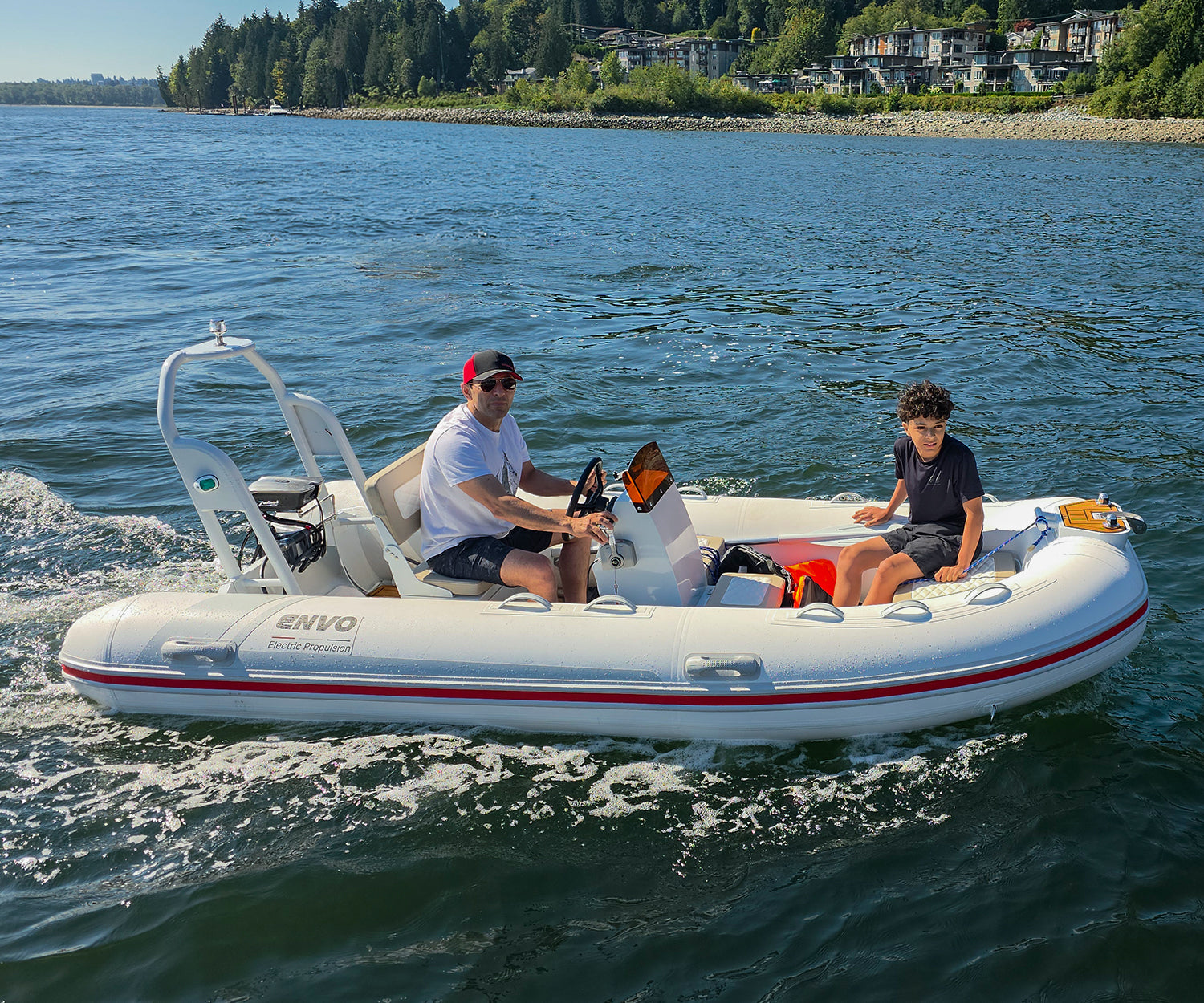
ENVO pairs the boat with the EZ X20 48 V electric outboard: 10.5 kW input power, remote steering and a sealed underwater motor architecture. A brushless, gearless underwater drive removes much of the mechanical complexity of a conventional gasoline outboard. The motor stays sealed and immersed for cooling, while an oversized water-cooled controller provides strong acceleration within a practical operating margin. In prototype testing it reached 27 km/h in full planing mode and pulled a medium-size wakeboarder from the water.
Ready-to-water package
One integrated system.
ENVO RIB 380
Customized aluminum RIB, German marine-grade PVC tubes, console, steering and five-seat upholstery.
X20 Propulsion
48 V electric outboard, remote controls, matched controller and installation hardware.
ENVO Energy
Configured modular battery system, BMS, protection, charging hardware and marine installation package.
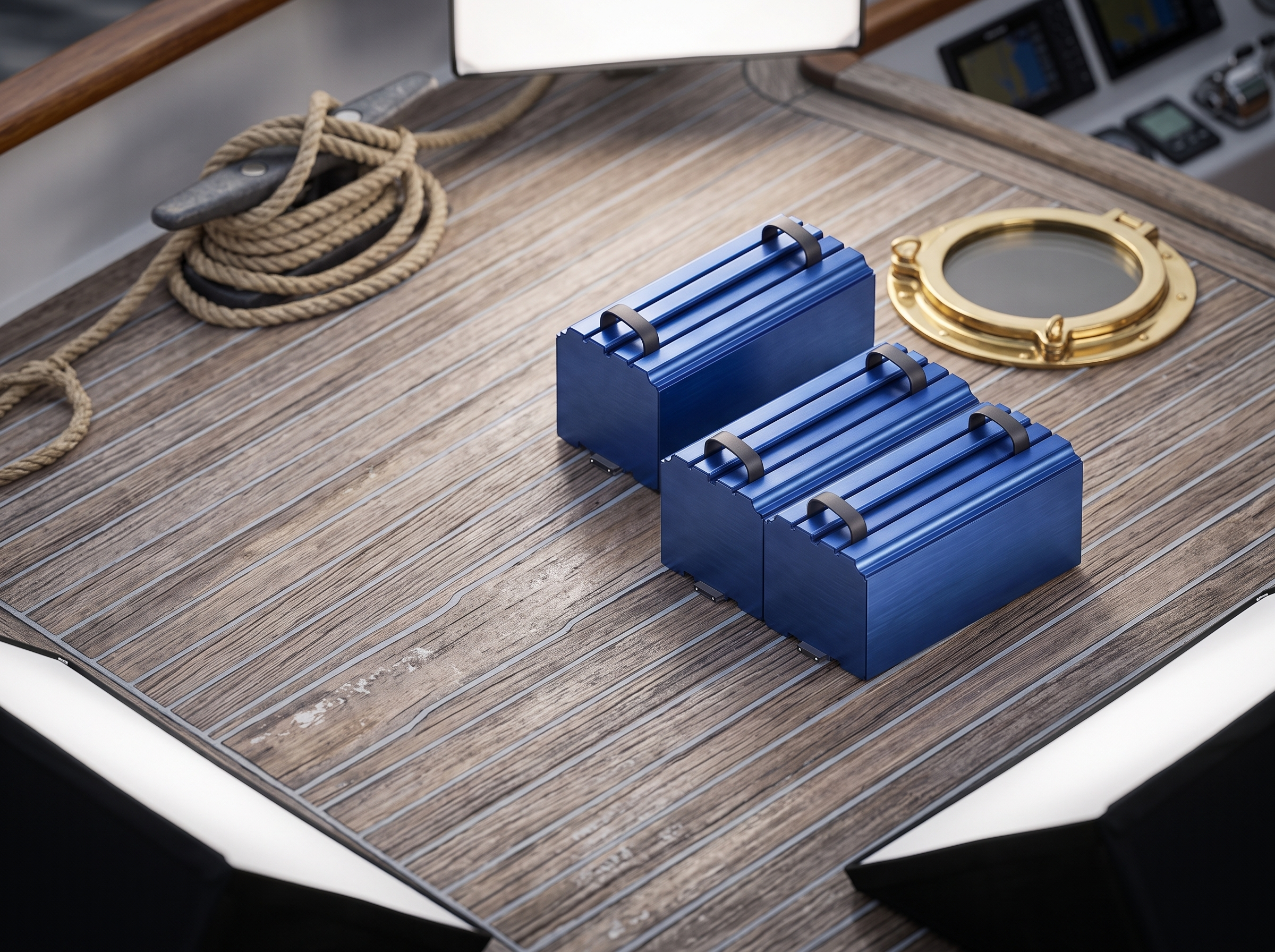
Modular
Add capacity by configuration instead of designing a completely different boat around every range requirement.
Serviceable
Battery modules, diagnostics and replacement support live inside a wider ENVO electric-mobility ecosystem.
Commercially scalable
The same energy architecture can support future boats, fleets, repowers and OEM integration, not just one hull.
Full specifications
- Boat type: Aluminum-hull RIB
- Length: 3.8 m / approx. 12.5 ft
- Tube material: German marine-grade PVC
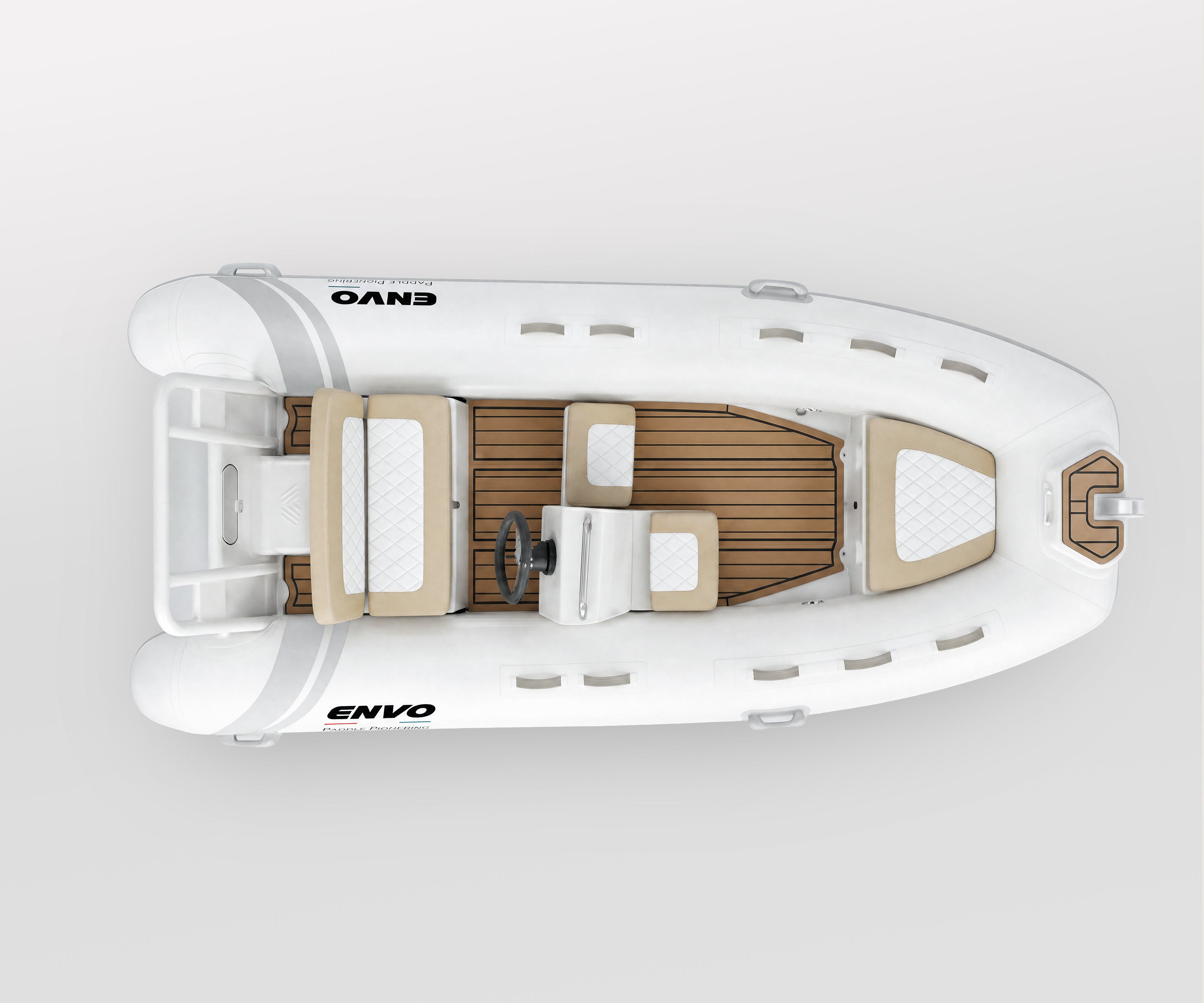
- Layout: Central console, steering wheel, five dedicated seats
- Seating: 2 rear including driver, 2 centre, 1 bow
- Boat weight: Approx. 175 kg
- Propulsion: EZ X20 electric outboard
- System voltage: 48 V
- Motor input power: 10.5 kW
- Installed propulsion mass: Approx. 35 kg ENVO installation target
- Battery architecture: UPT-derived modular ENVO marine battery system
- Battery module: Approx. 2.832 kWh each
- Recommended configuration: 4 modules / approx. 11.3 kWh nominal target
- Battery mass: Approx. 15 kg/module target
- Top speed: 27 km/h achieved during prototype testing
- Range: 30–70 km development target depending on speed, payload, water/weather and battery configuration
- Charging: Overnight AC charging
If you have any questions, you are always welcome to contact us. We'll get back to you as soon as possible, within 24 hours on weekdays.
-
Shipping Information
Use this text to answer questions in as much detail as possible for your customers.
-
Customer Support
Use this text to answer questions in as much detail as possible for your customers.
-
FAQ’s
Use this text to answer questions in as much detail as possible for your customers.
-
Contact Us
Use this text to answer questions in as much detail as possible for your customers.
FAQ
Before you launch.
Where can I test ride the ENVO Electric Boat?
A demo boat is currently available through the ENVO / EBikeBC showroom in Burnaby, BC. Supervised 30-minute test rides are arranged at Cates Park or Vanier Park in ocean water, subject to boat availability, weather, and water conditions. The test-ride fee is C$400 and must be prepaid to schedule the appointment. If you place an order for an ENVO Electric Boat, the full C$400 test-ride fee is applied to your purchase.
How does the 25% built-to-order deposit work?
The ENVO Electric Boat is built to order. A 25% deposit is due when the order is placed. For the C$19,979 base boat, the deposit is C$4,994.75 before tax and selected options. Production normally starts within 3 business days of the order. Once production starts, the deposit is non-refundable unless ENVO is unable to deliver the product. The remaining 75% balance is due before delivery.
How long does delivery take?
The current estimated delivery time is approximately 4 months from order placement. Because the boat is built to order, actual timing can be affected by production, component availability, international freight, customs, and other circumstances.
Is shipping included in the C$19,979 price?
No. The listed price is Ex Works from ENVO’s Vancouver-area warehouse. Shipping or destination delivery, applicable taxes, licensing or registration costs, and other destination-specific charges are additional. ENVO can quote delivery based on the customer’s location.
Can I order the ENVO Electric Boat in the United States?
Yes. ENVO plans to offer the Electric Boat 380 in both Canada and the United States. Delivery costs, taxes, financing, licensing, registration, and boating rules vary by destination.
Is financing available?
Financing options are available in Canada and the United States through third-party financing providers, subject to application and approval. Rates, terms, and availability depend on the customer and jurisdiction.
How far can my family realistically go on one charge?
Range changes significantly with speed, passenger weight, wind, waves, current, and watersports use. As a practical planning example, a family of two parents and a school-age child spending a fun day on the lake—cruising, playing, and doing some light pulling—can reasonably plan around approximately 30 km of total use. Slower cruising can extend range, while sustained high-speed operation reduces it.
How long can the boat run at or near full power?
Approximately 80 minutes under typical test conditions. Operating at lower speeds materially increases running time and usable range.
How fast is it with passengers onboard?
With a typical tested passenger load of about 200 kg, such as three people, the boat has commonly reached approximately 20–22 km/h. Actual speed varies with total load and water conditions.
How easily does the boat get on plane?
The boat begins transitioning onto plane at approximately 10–12+ km/h, depending on load, trim, and water conditions. The ENVO Electric Boat is intended as an efficient family and recreational electric RIB rather than a high-speed performance boat.
Can it pull a wakeboarder, kneeboard, or tube?
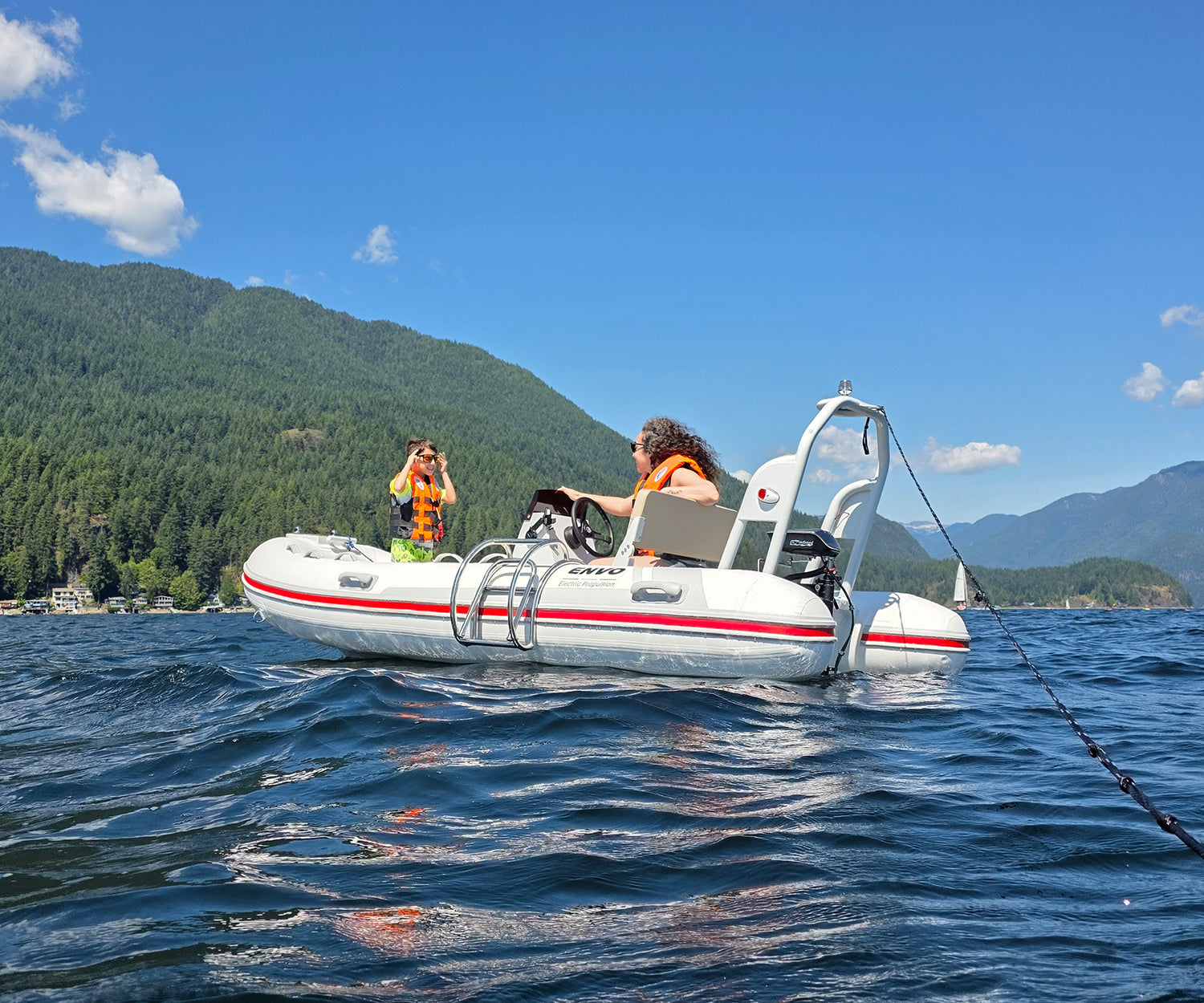
Yes, within its power class. The boat has been tested successfully pulling an adult wakeboarder out of the water. Wakeboarding and kneeboarding can be especially fun for beginners and kids. It can also pull a two-person tube, but buyers looking for aggressive, high-speed tubing should choose a higher-powered boat.
What happens if I run out of battery on the water?
Trip planning and range management are the operator’s responsibility, just as fuel planning is with a gasoline boat. Always plan with a reserve and consider an appropriate backup for where you boat. Depending on the application, that may include paddles, an auxiliary trolling motor, a properly installed small backup engine, a towing plan, and reliable cellular or marine-radio coverage. Never plan a trip assuming maximum range will always be available.
How long does it take to charge?
Allow approximately 3 hours per battery with the supplied 20A charger. With four battery modules and one charger, allow approximately 12 hours to charge all four batteries. This makes overnight charging practical for normal recreational use.
Can I remove the batteries?
Yes. The battery modules are removable, but they are heavy, so frequent removal is not recommended for normal use.
Can I add more batteries for longer range?
Potentially, but the standard boat is configured around four battery modules. Adding battery capacity may require customer-performed custom mounting, wiring, and system integration. It is not currently a standard plug-and-play factory option.
How should I store the batteries during winter?
For extended storage, keep the batteries in a controlled indoor environment at approximately room temperature and maintain them at 50% state of charge or higher. Do not leave the batteries deeply discharged for extended periods.
Can I use the ENVO Electric Boat in saltwater?
Yes. After saltwater use, rinse the boat and exposed equipment thoroughly with fresh water. Saltwater is corrosive, so normal inspection and care of the hull, tubes, steering, electrical connections, motor, and trailer remain important.
Can I leave the boat docked in the water?
Yes, but ENVO does not recommend leaving it in the water unnecessarily for extended periods. If the boat is left docked, it should be secured against unauthorized access, and the battery and electrical systems should be monitored appropriately. Proper storage is preferred for longer periods of non-use.
What maintenance does an electric boat actually need?
Electric propulsion eliminates many gasoline-engine service items such as engine oil, spark plugs, fuel filters, and fuel-system maintenance. Owners still need normal marine inspection and care of the propeller, hull, inflatable tubes, steering, electrical connections, batteries, and trailer. After saltwater use, freshwater rinsing is important.
Who services the ENVO Electric Boat?
The boat is designed to be highly serviceable. ENVO provides replacement parts, instructions, and technical references so many service tasks can be completed by the owner or a competent local marine technician. ENVO also plans to stock key motor, electrical, and battery replacement parts in Canada.
What warranty does the boat come with?
The ENVO Electric Boat is covered under ENVO’s applicable general warranty terms. Customers should review the current ENVO warranty terms at the time of purchase for coverage periods, exclusions, and the claim process.
Can I install a fish finder, trolling motor, USB outlet, or extra lighting?
Yes. Common marine accessories such as fish finders, trolling motors, USB/12V accessories, and additional lighting can be installed. Accessories should be properly fused, wired, and installed for marine use, and modifications should not interfere with the ENVO propulsion or battery systems.
Does the boat come with a trailer?
No. A trailer is optional. A suitable 14-foot boat trailer is available for approximately C$1,550. Trailers are supplied through third-party local manufacturers or importers so the customer can receive a road-legal, licensable, and insurable trailer. Exact trailer specifications may vary by supplier and location.
What vehicle do I need to tow the ENVO Electric Boat?
The boat itself weighs only about 300 kg including the batteries, motor, and typical accessories, so many small cars, SUVs, and trucks can tow it. The trailer adds additional weight, so always confirm the vehicle manufacturer’s rated towing capacity for the combined boat-and-trailer weight and use an approved hitch and proper road-legal towing equipment.
Will the boat and trailer fit in a standard garage?
In many cases, yes. A 14-foot trailer is the recommended size for the boat. Garage depth, door height, trailer tongue length, and the exact third-party trailer configuration vary, so customers should confirm their available dimensions before ordering.
Do I need a boating licence to operate it in Canada?
For recreational use in Canada, the operator of a motorized pleasure craft needs proof of competency. The most common proof is a Pleasure Craft Operator Card (PCOC), which is valid for life. Transport Canada notes limited exceptions, including certain visitors and operation in Nunavut and the Northwest Territories. Customers should verify the current rules for their situation before operating.
Does the boat need a Pleasure Craft Licence in Canada?
Yes, for normal recreational use when the boat is principally operated and maintained in Canadian waters. Transport Canada requires a Pleasure Craft Licence (PCL) for a pleasure craft equipped with one or more engines totaling at least 7.5 kW (10 hp). The ENVO Electric Boat’s 10.5 kW propulsion system is above that threshold. The PCL is for the boat and is separate from the operator’s proof of competency.
Do I have to register the boat in Canada?
For ordinary private recreational use, a Pleasure Craft Licence is generally the relevant federal requirement rather than vessel registration. Transport Canada identifies vessel registration for specific situations such as commercial operation, a marine mortgage, or reserving an official vessel name. Owners who plan to travel internationally should also check destination-country requirements.
Do I need boat insurance in Canada?
Federal passenger-vessel liability insurance rules generally do not apply to a private pleasure craft used only for the owner’s friends and family without charging passengers. Insurance is nevertheless strongly recommended, and a marina, lender, storage provider, or other party may require it. Commercial use can trigger different insurance and regulatory requirements.
What optional accessories can I add when ordering?
Current paid options include hydraulic storage pistons (C$299), boat cover (C$149), four life jackets (C$149), automatic electric pump (C$179), stainless steel side ladder (C$449), aluminum roll bar with navigation lights (C$1,299), and a suitable 14-foot boat trailer (approximately C$1,550). Availability and exact third-party trailer specifications may vary by location.
Regulatory note & Canadian sources
Canadian boating rules can change and may vary with the vessel’s use. The regulatory answers above are based on Transport Canada information reviewed in August 2026. Commercial use, rentals, passenger-for-hire use, international travel, and local waterways may have additional requirements. Customers should confirm current requirements before operation.
Canadian regulatory sources: